Education Documents Checklist: Important Academic Records to Keep
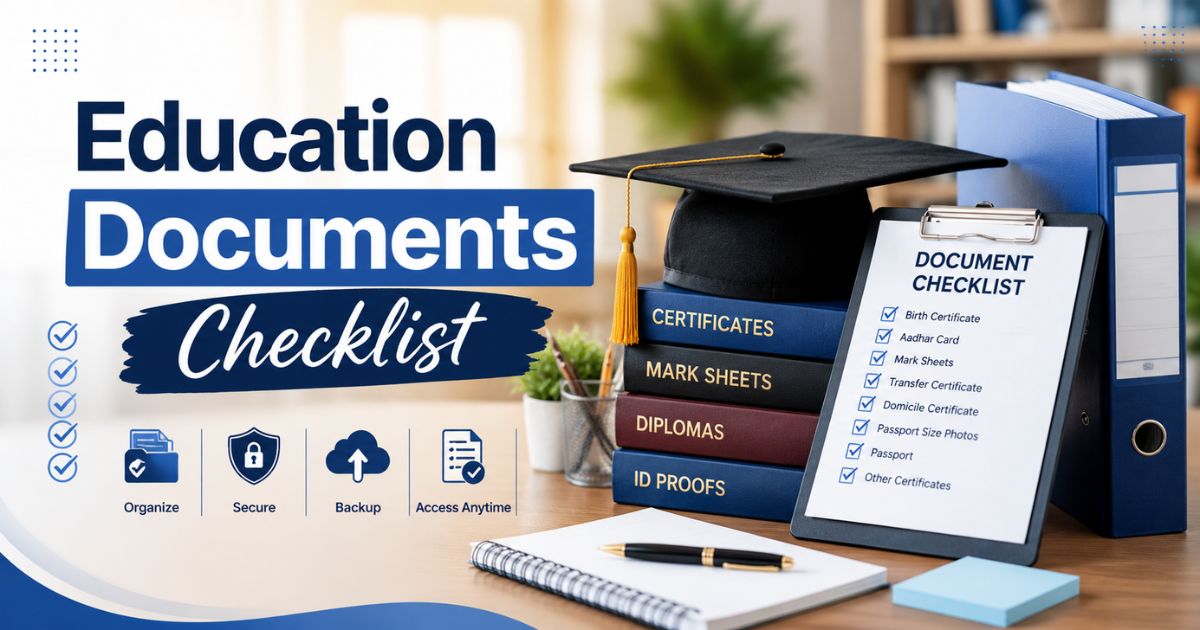
Keeping the right academic records can save you time when you apply for university, look for a job, pursue professional qualifications, or need to verify your education history. An education documents checklist helps students, parents, graduates, and working professionals identify the records worth keeping and organize them before they are needed.
Your education file may include school certificates, mark sheets, degree certificates, transcripts, diplomas, professional certifications, training records, admission documents, and academic awards. The exact documents you need depend on your education history and the requirements of the institution or organization requesting them.
This guide explains which education documents to keep, how to organize physical and digital copies, what to do when a document is missing, and how to create a long-term academic records system that works across the United States, United Kingdom, and India.
What Is an Education Documents Checklist?
An education documents checklist is a practical list of academic and educational records that you may need to keep for future applications, verification, employment, further study, or professional development.
A basic checklist can include:
- School certificates and mark sheets.
- Diplomas and degree certificates.
- Academic transcripts.
- Professional certifications.
- Training and course completion certificates.
- Admission and enrollment records.
- Scholarship and financial aid records.
- Academic awards and achievement certificates.
- Relevant examination results.
Not every document applies to every person. The goal is to maintain the records that accurately represent your own education and qualifications.
Which Education Documents Should You Keep?
The most useful approach is to organize academic records by education stage and document type. This prevents important records from becoming scattered across paper folders, email accounts, phones, and computers.
1. School Certificates and Mark Sheets
Keep important school records that verify your education and examination results. These documents may be requested when applying to colleges, universities, training programs, jobs, or other opportunities.
Examples include:
- School leaving or completion certificates.
- Secondary school certificates.
- Examination results.
- Mark sheets.
- Report cards where relevant.
- Academic achievement certificates.
2. Degree and Diploma Certificates
Degree and diploma certificates are among the most important long-term education records. They provide formal evidence of qualifications awarded by an educational institution.
Keep records for:
- Bachelor's degrees.
- Master's degrees.
- Doctoral degrees.
- Diplomas.
- Postgraduate qualifications.
- Other recognized academic qualifications.
Store the original securely and maintain a clear digital copy for situations where a digital submission is accepted.
3. Academic Transcripts
An academic transcript provides a detailed record of courses, subjects, grades, credits, or other academic information. A transcript can be different from a degree certificate, so don't assume that keeping the degree certificate alone is enough.
Keep transcripts when they are issued and retain updated or official versions when required.
4. Professional Certifications
Professional certifications can demonstrate specialized knowledge or skills beyond a traditional degree. These may become particularly useful when applying for jobs or progressing within a profession.
Examples include:
- Technology certifications.
- Industry certifications.
- Professional licences.
- Skills certifications.
- Compliance-related qualifications.
For practical guidance on storing these alongside your professional records, see our Resume & Certificate Storage Tips.
5. Training and Course Certificates
Short courses and training programs can become useful parts of your academic and professional history. Keep certificates that demonstrate completed learning, particularly when they are relevant to your career or professional development.
These can include:
- Online course certificates.
- Workshop certificates.
- Professional development records.
- Training completion certificates.
- Continuing education records.
6. Admission and Enrollment Records
Admission-related documents can contain useful information about your educational history. Keep records that you are entitled to retain and that may be relevant to future applications or verification.
Examples include:
- Admission letters.
- Enrollment confirmations.
- Course registration records.
- Student identification information.
- Official correspondence about your program.
7. Scholarship and Financial Aid Documents
If you received a scholarship, grant, bursary, or other education-related financial assistance, keep the relevant records according to the applicable requirements.
These may include:
- Scholarship award letters.
- Grant documentation.
- Financial aid records.
- Scholarship renewal records.
- Relevant funding correspondence.
8. Academic Awards and Achievements
Academic awards may not be required for every application, but they can document achievements that are useful when building an academic or professional profile.
Consider keeping:
- Academic awards.
- Merit certificates.
- Competition certificates.
- Achievement letters.
- Academic recognition documents.
What Is the Difference Between a Certificate, Transcript, and Diploma?
These terms are sometimes used interchangeably, but they can serve different purposes.
| Document | What It Generally Shows | Why You May Need It |
|---|---|---|
| Certificate | Completion or award of a qualification, course, or achievement | Proof of a specific qualification or achievement |
| Transcript | Detailed academic subjects, grades, credits, or results | Admissions, academic verification, or professional evaluation |
| Diploma | A qualification awarded after completing a program | Education or employment verification |
The exact format and meaning of these documents can vary by country and institution. Always follow the requirements of the organization requesting your records.
How Should You Organize Education Documents?
A simple folder system is usually easier to maintain than a complicated filing structure. Start with broad categories and add subfolders only when you actually need them.
A practical digital structure could look like this:
- 01 School Records
- 02 College and University
- 03 Degrees and Diplomas
- 04 Transcripts
- 05 Professional Certifications
- 06 Training and Courses
- 07 Scholarships and Financial Aid
- 08 Awards and Achievements
Use the same basic structure for physical documents where practical.
Use Consistent File Names
Clear file names make digital records easier to search and reduce confusion between similar documents.
For example:
- University-Transcript-2025.pdf
- Bachelor-Degree-Certificate-2025.pdf
- Digital-Marketing-Certificate-2026.pdf
- Professional-Training-Certificate-2026.pdf
Including the institution, document type, and year can be helpful when you have many records.
Should You Keep Physical and Digital Copies?
For important academic records, maintaining both physical originals and secure digital copies can provide useful redundancy. The original may be required for certain forms of verification, while a digital copy can be easier to access and share when accepted.
A practical system is:
- Protect the original document.
- Create a clear digital scan.
- Store the digital copy securely.
- Maintain an additional backup for particularly important records.
- Check the files periodically to ensure they remain readable.
How Should You Protect Digital Academic Records?
Education records can contain personal information, so digital copies should be treated as sensitive documents. Avoid storing important records in unsecured public folders or sharing them more widely than necessary.
Good practices include:
- Use strong, unique passwords for storage accounts.
- Enable multi-factor authentication where available.
- Keep devices updated and protected.
- Review sharing permissions.
- Use reputable storage services.
- Keep a backup of critical documents.
If you are building a broader system for managing digital records, explore our Digital Vault.
How Does Education Document Management Differ by Country?
The documents you keep may be similar across countries, but the systems used to access or verify records can differ.
United States
In the United States, education records can include information such as grades, transcripts, course schedules, and other student-related records maintained by an educational institution. Privacy and access are governed by applicable laws and institutional policies.
Because requirements differ between institutions, check the specific school, college, university, employer, or licensing body when requesting or submitting records.
United Kingdom
In the UK, learners may have access to official learning or education records through government and education services, depending on the part of the UK and the type of qualification. England, for example, has a Personal Learning Record for certain qualifications, while newer digital education record services are also being introduced.
Keep your own certificates and supporting documents even when a digital record exists, because an organization may request a specific document or format.
India
In India, DigiLocker provides access to authentic digital documents issued by participating organizations, including educational boards and institutions. Where an official digital document is available, it can be useful for applications and verification.
However, requirements can still vary between institutions and applications, so check what the receiving organization accepts before relying on a digital copy alone.
What Should You Do If an Education Document Is Missing?
Don't assume a missing certificate means your education history cannot be verified. The correct replacement or verification process depends on the institution, awarding body, document type, and country.
A practical process is:
- Identify exactly which document is missing.
- Contact the school, college, university, examination board, or awarding body that issued it.
- Ask about replacement, duplicate, transcript, or verification procedures.
- Prepare identification or supporting information if requested.
- Save the replacement or official verification securely once received.
Common Mistakes to Avoid
- Keeping all academic records in one unorganized folder.
- Relying only on email attachments.
- Never creating digital backups of important originals.
- Using file names such as "certificate1.pdf" or "document.pdf".
- Deleting older academic records without checking whether they may be needed later.
- Sharing complete academic records with unverified recipients.
- Forgetting professional certificates earned after graduation.
- Failing to check whether a university, employer, or licensing body requires an official transcript or certified copy.
Expert Tips for Maintaining an Academic Records System
A good education document system should be simple enough that you will actually maintain it. You do not need dozens of folders or complicated software.
- Save documents immediately: Add new certificates and academic records as soon as you receive them.
- Keep originals protected: Store important physical documents in a secure, dry location.
- Scan important records: Create readable digital copies for backup and convenient access.
- Use consistent names: Make every file identifiable without opening it.
- Review annually: Check your records, backups, and professional certifications at least periodically.
- Verify before submitting: Check the exact document and format requested by the university, employer, or organization.
Key Takeaways
- An education documents checklist helps you identify and organize important academic records before you need them.
- Keep relevant certificates, transcripts, degrees, diplomas, examination records, and professional qualifications.
- Protect original documents and maintain secure digital copies.
- Use simple folders and consistent file names to make records easy to find.
- Check the exact document requirements of universities, employers, licensing bodies, and other organizations.
- Country-specific systems can help with digital records, but they do not necessarily replace every document you may personally need.
- Review your academic records periodically and add new qualifications as your education continues.
Conclusion
A well-maintained academic records system can save significant time when education or career opportunities arise. The best approach is straightforward: identify the documents relevant to your education history, protect the originals, create secure digital copies, organize them into clear categories, and review the collection periodically.
Whether you are a student preparing for university, a graduate applying for jobs, or a professional maintaining qualifications earned years ago, keeping your records organized gives you greater control over your educational history. Nexa Life Vault can be used as part of a broader personal document organization strategy for keeping important records structured and accessible.
For more guidance, explore our Education Vault and related document management resources.
Frequently Asked Questions
cmp6hs57y000oc2bxnj5buqzv
Editorial Contributor
Author and technology contributor at NexaLifeVault.
Share this post
Comments (0)
No comments yet. Be the first to comment!