Education Documents Management: How to Organize Academic Records
Learn how to organize and protect education documents, including certificates, degrees, diplomas, transcripts, training records, and other academic documents.
Education documents are important records that can remain valuable long after you complete school, college, or professional training. Certificates, degrees, transcripts, mark sheets, diplomas, and other academic records may be required when applying for jobs, higher education, professional courses, scholarships, or official verification.
Keeping these records organized from the beginning makes it easier to find the right document whenever you need it. Instead of searching through old files, emails, storage boxes, or different devices, you can maintain a structured system where your academic records are secure and easy to access.
Education documents management involves collecting, organizing, storing, backing up, and protecting your academic and educational records throughout your education journey. A good system should work for students as well as graduates and working professionals who need to maintain certificates and qualifications for the long term.
In this guide, you'll learn how to organize important education documents, create secure physical and digital records, maintain backups, and build a simple system that can grow with your academic and professional journey.
Why Education Documents Management Is Important
Academic records can be requested at different stages of life. A university may require previous transcripts, an employer may request proof of qualifications, or a professional organization may ask for certification records.
Keeping your education documents organized can help you:
- Find certificates and academic records quickly.
- Prepare applications for jobs or further education.
- Provide proof of qualifications when required.
- Maintain secure backups of important records.
- Reduce the risk of losing original documents.
- Track professional certifications and training.
- Keep your educational history organized for the long term.
What Are Education Documents?
Education documents include records that verify your academic qualifications, training, achievements, and educational history. The exact documents you need will depend on your education level, country, institution, and professional requirements.
Common education records include:
- School certificates.
- Mark sheets and report cards.
- Diplomas.
- Degree certificates.
- Academic transcripts.
- Professional certifications.
- Training certificates.
- Course completion certificates.
- Scholarship documents.
- Admission and enrollment records.
Keeping these documents together creates a reliable record of your educational journey and makes future verification much easier.
Who Should Organize Education Documents?
Education document management is useful at every stage of learning. Students can start organizing records early instead of waiting until they need them for an application.
A structured system can benefit:
- School students.
- College and university students.
- Recent graduates.
- Professionals completing additional courses.
- People pursuing professional certifications.
- Applicants preparing for higher education.
- Professionals maintaining long-term qualification records.
Benefits of a Dedicated Education Document System
A dedicated education document system keeps academic records separate from unrelated personal files. This makes it easier to locate certificates, transcripts, and other educational documents when they are required.
Some key benefits include:
- Faster access to academic records.
- Better organization of certificates.
- Protection against accidental loss.
- Easy digital backup management.
- Simpler job and university applications.
- Better long-term record keeping.
If you're also organizing career-related records, our Job Vault provides practical resources for managing resumes, certificates, employment records, and other professional documents.
Start Organizing Your Education Records Early
You don't need to wait until graduation to organize your academic records. Saving documents as you receive them prevents important certificates and records from becoming scattered across different locations.
A simple education document system can include separate categories for school records, higher education, professional certifications, training, scholarships, and other academic documents.
Starting early makes it easier to maintain an accurate educational record throughout your studies and into your professional career.
Essential Education Documents You Should Keep
A complete education document system should include records from every important stage of your academic and professional learning journey. Keeping these documents organized from the beginning makes it easier to provide proof of qualifications when applying for further education, employment, professional certifications, or other opportunities.
School Certificates and Academic Records
School records form the foundation of your educational history. Keep important certificates and academic records safely, even after moving on to higher education.
These may include:
- School leaving certificates.
- Secondary school certificates.
- Mark sheets.
- Report cards.
- Academic achievement certificates.
Degree and Diploma Certificates
University degrees, diplomas, and other higher education qualifications can remain important throughout your career. Store the original documents carefully and maintain secure digital copies for everyday access.
Common records include:
- Bachelor's degree certificates.
- Master's degree certificates.
- Diplomas.
- Postgraduate qualifications.
- Professional degree certificates.
Academic Transcripts
Transcripts provide detailed information about courses, subjects, grades, or academic performance. Universities, employers, and professional organizations may request them for verification or admission purposes.
Keep both official transcripts and any other academic records you're entitled to retain.
Professional Certifications
Professional certifications can demonstrate specialized knowledge and skills. Keep certificates organized separately so you can easily identify current qualifications and monitor renewal requirements where applicable.
Examples include:
- Industry certifications.
- Technology certifications.
- Professional licences.
- Skills certifications.
- Compliance certifications.
If you're also organizing career-related certificates, our Resume & Certificate Storage Tips guide provides practical advice on storing and protecting professional records.
Training and Course Completion Certificates
Short courses and professional training programs can add valuable evidence to your educational history. Keep certificates for completed courses even if they aren't part of a formal degree program.
These may include:
- Online course certificates.
- Workshop certificates.
- Training completion records.
- Continuing education certificates.
- Skill development certificates.
Admission and Enrollment Records
Admission-related documents can contain important information about your educational history. Keep records that you're entitled to retain, particularly when they relate to enrollment, course selection, or institutional requirements.
Examples include:
- Admission letters.
- Enrollment confirmations.
- Student identification records.
- Course registration documents.
Scholarship and Financial Aid Records
If you've received a scholarship, grant, or other educational financial assistance, maintain relevant records according to the applicable requirements.
These may include:
- Scholarship award letters.
- Grant documentation.
- Financial aid records.
- Scholarship renewal documents.
Academic Awards and Achievements
Academic achievements can demonstrate your accomplishments and may be useful when preparing applications or professional profiles.
Consider keeping:
- Academic awards.
- Competition certificates.
- Merit certificates.
- Achievement letters.
- Academic recognition documents.
Create a Complete Education Document Collection
Once you've identified your important education records, organize them into clearly labeled categories instead of keeping everything together in one folder. This makes it easier to locate a specific certificate or transcript when required.
A well-organized education record system can also complement your professional document management. For broader career records, explore our Important Career Documents guide and keep education and employment documents connected without mixing unrelated files.
How to Organize and Secure Education Documents
Once you've gathered your academic records, the next step is to create a simple system that keeps them organized, protected, and easy to access. Education documents may be needed years after graduation, so relying on a single paper folder or device can create unnecessary risks.
Create Separate Folders for Different Education Records
Start by dividing your documents into clear categories. A consistent folder structure makes it much easier to locate a certificate, transcript, or training record when required.
A practical structure could include:
- School Records
- College & University
- Degrees & Diplomas
- Academic Transcripts
- Professional Certifications
- Training & Courses
- Scholarships & Financial Aid
- Awards & Achievements
Use Clear File Names
Digital documents should have descriptive names rather than generic names such as "certificate.pdf" or "document1.pdf". A consistent naming system makes searching much easier.
For example:
- Bachelor-Degree-Certificate-2025.pdf
- University-Transcript-2025.pdf
- Digital-Marketing-Certificate-2026.pdf
- Training-Certificate-SEO-2026.pdf
Protect Original Certificates
Original educational certificates can be difficult to replace, so store them carefully in a secure physical location.
Good practices include:
- Use protective document sleeves.
- Keep certificates flat and avoid unnecessary folding.
- Store papers away from moisture.
- Keep documents away from direct sunlight.
- Use a secure filing cabinet or dedicated document folder.
Create Digital Copies
Creating digital copies gives you an additional layer of protection if an original document is lost or damaged. Scan important records at a quality that keeps text and details readable.
Consider creating digital copies of:
- Degree certificates.
- Diplomas.
- Academic transcripts.
- School certificates.
- Professional certifications.
- Training certificates.
For additional guidance on protecting digital records, explore our Digital Vault.
Use Secure Cloud Storage
Keeping a backup in secure cloud storage can make your education records accessible when you need them from a different device. Use a trusted storage provider and protect the account with strong security measures.
Consider:
- Using a strong, unique password.
- Enabling multi-factor authentication.
- Reviewing sharing permissions regularly.
- Keeping sensitive documents private.
- Maintaining an additional offline backup.
Keep Multiple Backup Copies
Important academic records should not depend on a single storage location. Maintaining multiple copies reduces the risk of losing everything if one device or storage account becomes unavailable.
A simple approach could include:
- Original physical documents.
- Secure cloud backup.
- Encrypted external storage.
Review Your Education Records Regularly
Your education document collection can continue growing as you complete new courses, certifications, degrees, or training programs. Review your folders periodically and add new records as soon as you receive them.
During each review, check that:
- New certificates have been added.
- Digital copies are readable.
- Files are stored in the correct folders.
- Backups are accessible.
- Duplicate files are properly managed.
Keep Education and Career Records Connected
Your academic qualifications often become part of your professional record. Keep education documents organized separately while maintaining easy access to them when preparing resumes, job applications, or employment verification.
Our How to Organize Job Documents guide provides additional strategies for managing professional records, while the Education Vault can serve as the central place for your academic document organization.
Best Practices for Managing Education Documents
Organizing education documents is not a one-time task. As you complete new courses, earn certifications, or continue your studies, your collection of academic records will grow. A few simple habits can help keep these documents organized and protected for the long term.
Update Your Education Records Regularly
Add new documents to your education folder as soon as you receive them. This prevents certificates and academic records from being forgotten or stored in different locations.
Review your records whenever you:
- Complete a degree or diploma.
- Earn a professional certification.
- Finish a training course.
- Receive an academic award.
- Complete a new qualification.
Keep Original Documents Secure
Original certificates and transcripts should be protected from moisture, physical damage, and unauthorized access. Use digital copies for routine applications whenever an original is not specifically required.
Protect Digital Education Records
Academic documents can contain personal information, so digital copies should be stored securely. Use strong passwords, multi-factor authentication, and appropriate access controls for your storage accounts.
Avoid sharing complete academic records publicly or uploading sensitive documents to unknown websites.
Maintain More Than One Backup
A single backup may not be enough for records you expect to keep for many years. Maintain more than one secure copy so your academic history remains available if one storage location fails.
A practical system can include:
- Original physical documents.
- Secure cloud storage.
- Encrypted external storage.
Archive Older Academic Records
Older education records may still be useful for employment verification, higher education applications, professional licensing, or other official purposes. Instead of deleting them, move them into an archive folder while keeping current documents easier to access.
Common Education Document Management Mistakes
- Keeping certificates in multiple unorganized locations.
- Not creating digital copies of important records.
- Using unclear file names.
- Storing original certificates in unsafe conditions.
- Forgetting to back up newly earned certificates.
- Deleting older academic records unnecessarily.
- Sharing sensitive academic documents without checking the recipient.
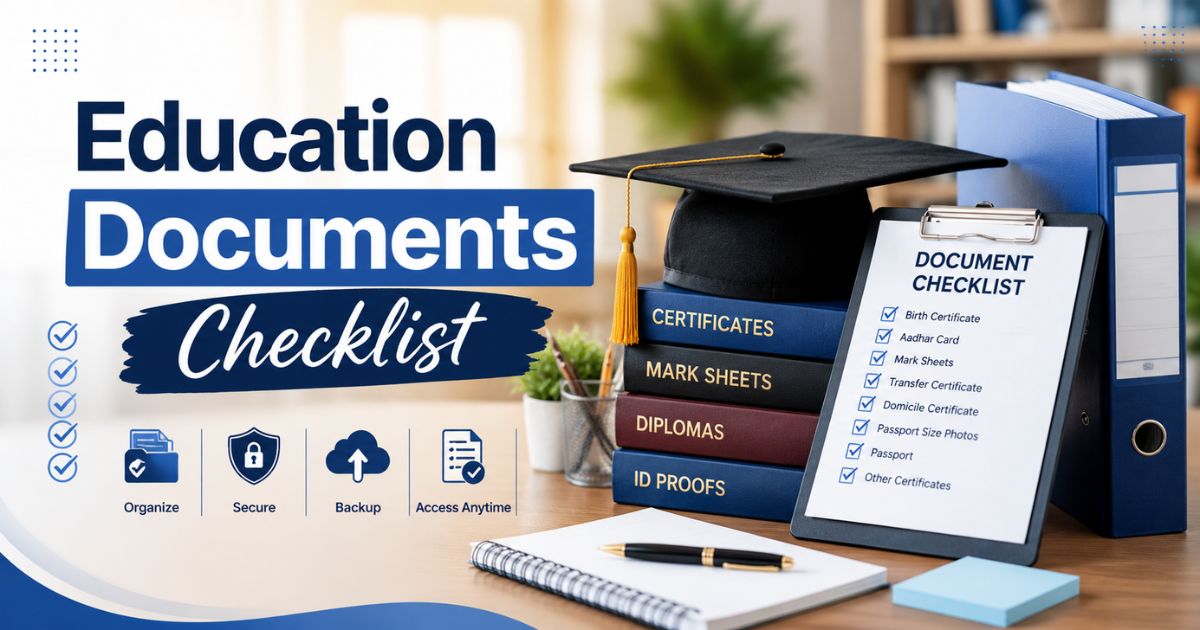
Education Document Checklist
Before considering your education records organized, review whether you have appropriate copies of the documents relevant to your academic history.
- School certificates and mark sheets.
- Degree and diploma certificates.
- Academic transcripts.
- Professional certifications.
- Training and course certificates.
- Admission and enrollment records.
- Scholarship or financial aid records.
- Academic awards and achievements.
Not every document will apply to every person, so keep records according to your education history and any applicable retention requirements.
Conclusion
Good education documents management helps protect the academic records you've collected throughout your learning journey. By keeping original documents secure, creating reliable digital copies, using clear folder structures, and reviewing your records regularly, you can make important certificates and qualifications easier to access whenever they're needed.
An organized education record system can also support your professional life because academic certificates and qualifications are often used during job applications, employment verification, and career development.
Frequently Asked Questions
cmp6hs57y000oc2bxnj5buqzv
Editorial Contributor
Author and technology contributor at NexaLifeVault.
Share this post
Comments (0)
No comments yet. Be the first to comment!