Emergency Document Go-Bag Checklist for Natural Disasters
Build a disaster-ready emergency document go-bag. Learn what to include, how to organize originals vs. copies, and how to keep records accessible during evacuation.
When a wildfire or hurricane evacuation order comes through, most people grab their phone, their pets, and maybe a suitcase and forget the paperwork that actually gets them back on their feet afterward. An emergency document go-bag checklist solves that problem by keeping your most critical records in one place, ready to leave with you in minutes. This guide covers exactly what to include, how to organize it, and how to keep it secure without slowing down your exit.
What Is an Emergency Document Go-Bag?
An emergency document go-bag is a compact, grab-and-go folder or waterproof pouch containing the identity, financial, insurance, medical, and property records you'd need immediately after a disaster. Unlike a general emergency kit (water, flashlight, first aid), a document go-bag is specifically about paperwork and digital backups the records that determine how quickly you can file an insurance claim, apply for disaster assistance, replace a lost ID, or prove ownership of your home or vehicle.
Why Document Preparedness Matters During Evacuations
Recovery after a hurricane, wildfire, flood, or earthquake often depends on paperwork you may not think about until you need it. Without proof of identity, you may face delays accessing bank accounts or applying for federal assistance. Without insurance policy numbers, filing a claim takes longer. Without medical records, urgent care providers are working blind. Having these documents ready in advance removes one major source of stress during an already chaotic situation.
What Documents Should Go in Your Go-Bag?
The most important documents to include fall into five categories: identity, financial, insurance, medical, and property/legal records.
Identity Documents
- Passports and government-issued IDs
- Birth certificates and Social Security cards
- Marriage or divorce certificates
- Immigration or visa documents, if applicable
Financial Documents
- Bank and credit card account information
- Recent tax returns
- List of debts, loans, and mortgage details
- A small amount of emergency cash
Insurance Documents
- Homeowners or renters insurance policy and contact number
- Auto insurance details
- Health insurance cards and policy numbers
Medical Documents
- Current prescriptions and dosage information
- Allergy and chronic condition summaries
- Vaccination records
- Emergency contact list for doctors and family members
Property and Legal Documents
- Property deed or lease agreement
- Vehicle title and registration
- Wills, powers of attorney, or estate documents
- Recent home inventory photos or video, useful for insurance claims
How to Organize Your Go-Bag Documents
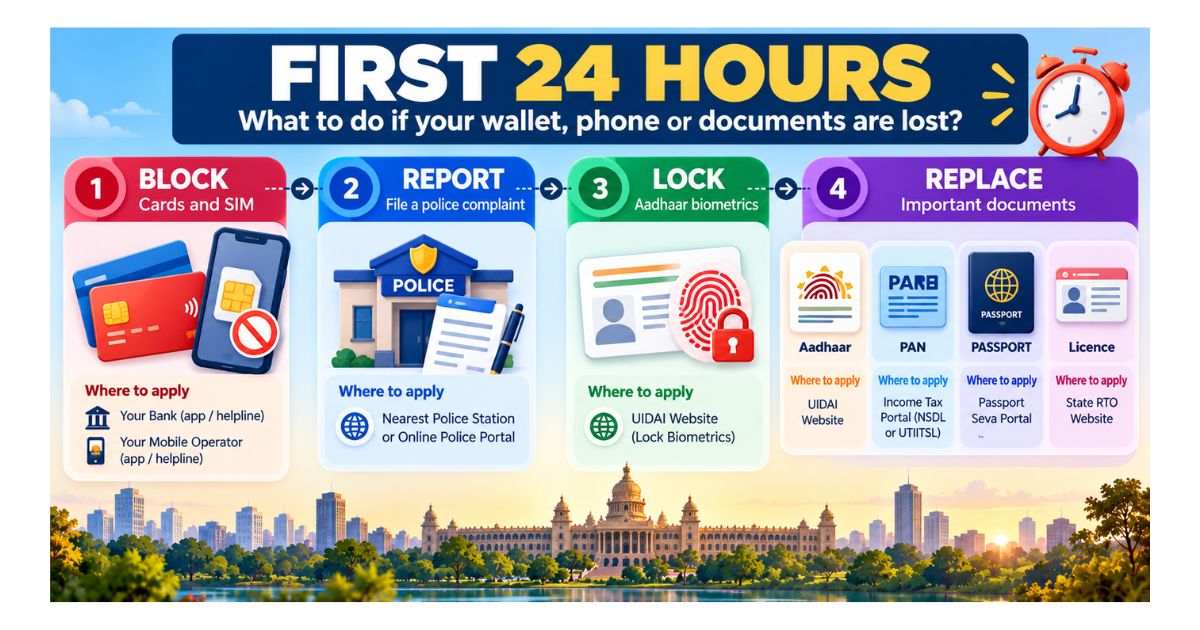
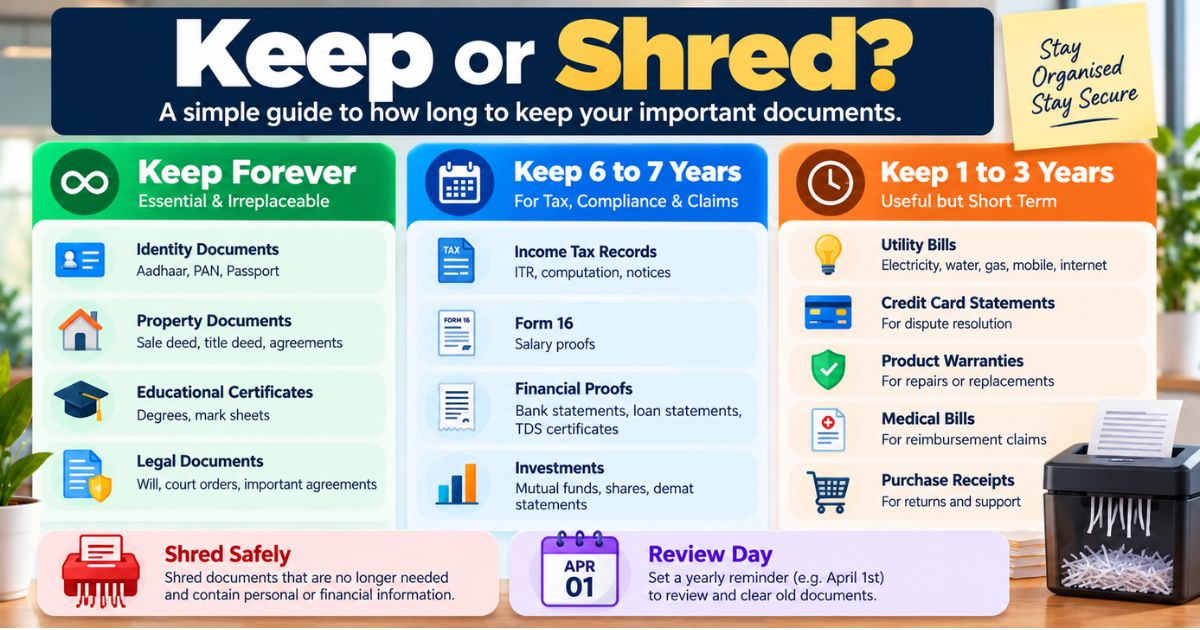
Keep original documents that are hard to replace (birth certificates, passports, titles) in a waterproof, fireproof pouch, and store certified copies separately from the originals when possible. Label folders clearly by category "Identity," "Insurance," "Medical" rather than piling everything into one envelope. This makes it faster to hand over the right document during an insurance call or aid application, instead of digging through unrelated paperwork under pressure.
Physical vs. Digital: Which Is Safer?
Relying on physical copies alone is risky, since fire, flooding, or a rushed evacuation can mean the folder gets left behind or damaged. Digital backups solve the accessibility problem but need to be stored securely, not just emailed to yourself or left on a single device.
| Storage Method | Strength | Risk |
|---|---|---|
| Physical folder only | No internet dependency | Can be lost, damaged, or left behind |
| Single device (phone/laptop) | Quick access | Device can be lost, damaged, or stolen |
| Secure digital storage + physical backup | Accessible from anywhere, protected against physical loss | Requires setup in advance |
The most resilient approach combines both: physical originals in a grab-and-go pouch, plus scanned copies stored securely and accessible from a phone or another device if you can't get back home.
Country-Specific Notes
This checklist applies broadly, but disaster assistance processes differ by country. In the United States, agencies like Ready.gov and FEMA outline specific documentation needed for federal disaster aid. If you're outside the US, check your national or local emergency management authority for equivalent requirements, since proof-of-identity and claims processes are not standardized globally.
Common Mistakes to Avoid
- Keeping everything in one folder with no categories makes it slow to find what you need under stress.
- No digital backup a lost or damaged physical folder means starting from scratch.
- Storing digital copies in only one place a single device or inbox isn't a real backup.
- Forgetting to update documents expired IDs or outdated insurance policies cause delays later.
- Not telling family members where the go-bag is preparedness only works if others can find it too.
How Nexa Life Vault Can Help
Once your physical go-bag is organized, the next step is making sure the same documents are backed up somewhere accessible even if the folder itself is lost. The Family Vault is designed to hold exactly this kind of household record identity documents, insurance policies, and medical information in one organized, secure place you can access from a phone during an evacuation. Pairing physical originals with a digital backup in your Digital Vault means you're not relying on a single copy of anything that matters.
Key Takeaways
- An emergency document go-bag should cover identity, financial, insurance, medical, and property records.
- Organize documents by category, not in one single folder, for faster access under stress.
- Keep hard-to-replace originals in a fireproof, waterproof pouch.
- Back up documents digitally so you're not relying on one physical copy.
- Review and update your go-bag at least annually or after major life changes.
- Disaster aid requirements vary by country check your local emergency management authority.
- Tell family members where the go-bag is kept so it's useful to everyone in the household.
Conclusion
Building an emergency document go-bag is a one-time setup that pays off the moment you need it most. Start with the five core categories, organize them clearly, back them up digitally, and revisit the contents once a year. If you want a secure, accessible place to store digital copies of these same records, the Family Vault gives your household one organized system to fall back on when it matters.
Frequently Asked Questions
cmp6hs57y000oc2bxnj5buqzv
Editorial Contributor
Author and technology contributor at NexaLifeVault.
Share this post
Comments (0)
No comments yet. Be the first to comment!