Financial Documents You Must Keep: Complete Guide
Learn which financial documents you should keep, how long to retain them, and the best ways to organize, store, and protect important financial records.
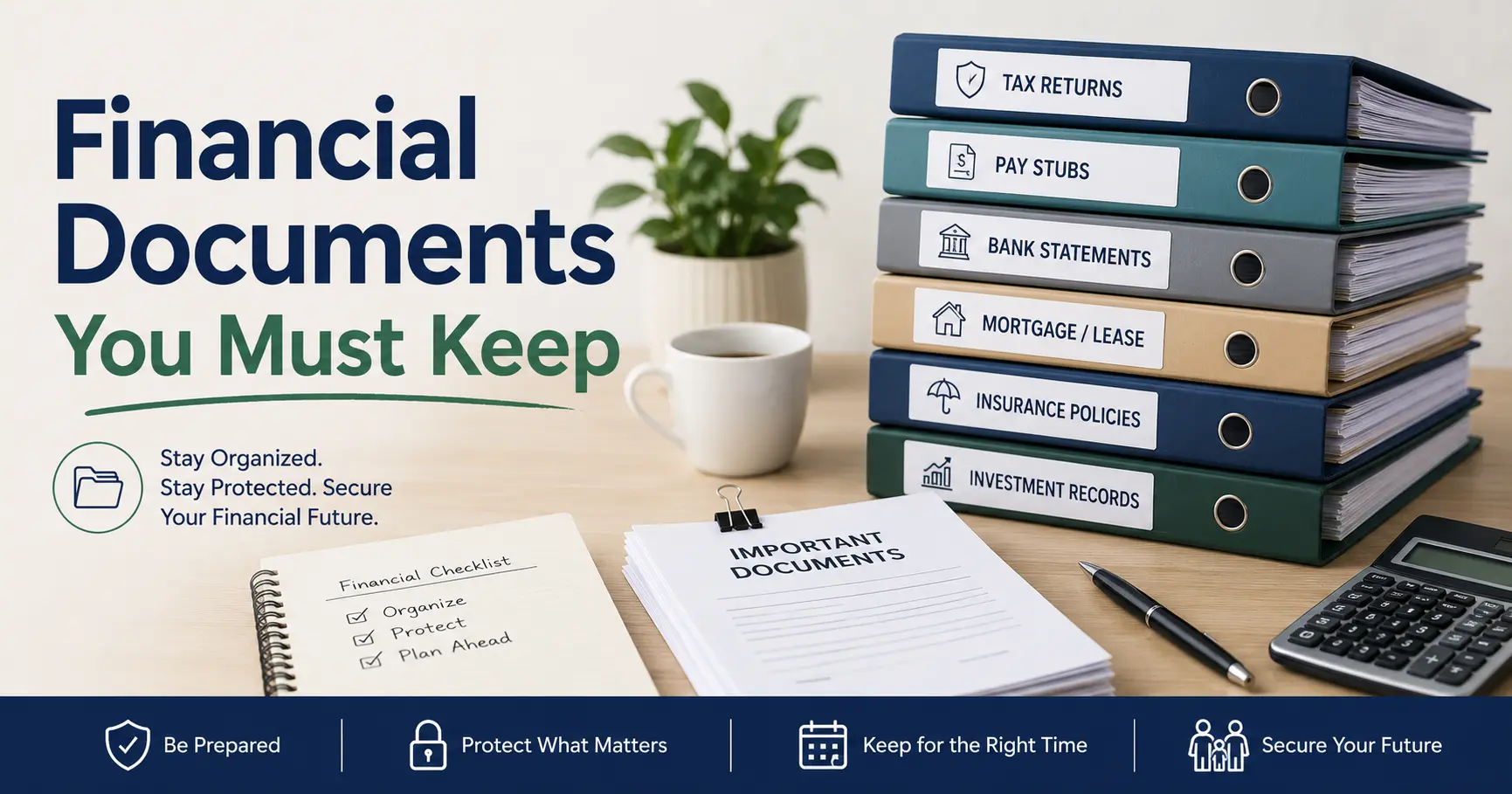
Managing your finances involves much more than earning, spending, and saving money. One of the most overlooked aspects of financial planning is keeping important financial documents organized and accessible. Whether you're filing taxes, applying for a mortgage, managing investments, settling an insurance claim, or planning your estate, having the right documents readily available can save time, reduce stress, and help you avoid costly mistakes.
Many people unknowingly throw away important paperwork or keep unnecessary records for years, creating clutter and making it difficult to find critical information when needed. Understanding which financial documents you must keep—and for how long helps you stay organized while protecting your financial future.
This guide explains the essential financial documents every individual and family should retain, recommended retention periods, practical organization methods, and secure storage strategies. You'll also learn how digital recordkeeping can simplify financial management while protecting sensitive information.
Keeping your financial documents organized is one of the foundations of long-term financial security. As part of our Wealth Vault, this guide helps you build a reliable document management system while connecting you with expert resources on investment records, tax document storage, estate planning, and tracking your net worth.
Why Keeping Financial Documents Matters
Your financial records serve as proof of important life events, ownership, income, expenses, tax filings, and legal agreements. Losing these documents can delay insurance claims, complicate tax audits, create problems during estate settlement, or make it difficult to verify ownership of valuable assets.
Well-organized documentation also helps you make informed financial decisions. When your records are easy to locate, reviewing spending patterns, tracking investments, preparing taxes, and updating your financial plan becomes much simpler.
In addition, maintaining accurate documentation supports long-term financial security by ensuring your loved ones can easily access essential information if they ever need to manage your affairs.
What Are Financial Documents?
Financial documents are records that provide evidence of your income, assets, liabilities, insurance coverage, taxes, investments, property ownership, retirement savings, and legal financial arrangements. These documents may exist in paper form, digital format, or both.
Some documents should be retained permanently, while others only need to be kept for a few years. Knowing the difference helps reduce clutter without increasing financial risk.
Keeping permanent financial records organized also makes it easier to accurately track your net worth. Up-to-date documentation helps you calculate your assets, liabilities, and overall financial progress with confidence.
Essential Financial Documents You Must Keep
1. Tax Records
Tax-related documents are among the most important financial records you will ever maintain. They support your reported income, deductions, credits, charitable contributions, business expenses, and investment transactions.
Important tax documents include:
-
Federal and state tax returns
-
W-2 forms
-
1099 forms
-
Tax payment confirmations
-
IRS correspondence
-
Receipts supporting deductions
-
Property tax records
-
Business income documentation
Generally, tax returns should be retained for several years after filing, while supporting documentation should remain available in case of audits or amended returns. Individuals with complex investments, rental properties, or business ownership often benefit from keeping tax records even longer.
If your website includes resources about Tax Document Storage Guide, this is an excellent place to help readers learn more about organizing and protecting tax paperwork.
2. Banking Records
Your banking documents provide evidence of income, payments, transfers, and account activity. They also help detect fraud, resolve disputes, and verify transactions during tax preparation.
Common banking records include:
-
Checking account statements
-
Savings account statements
-
Cancelled checks
-
Deposit confirmations
-
Wire transfer records
-
Loan payment confirmations
-
Bank correspondence
Most monthly bank statements are available electronically, making digital storage an efficient option. Before deleting older statements, confirm they are no longer needed for taxes, legal matters, or financial planning.
3. Investment Records
Investment documentation plays an essential role in tracking portfolio performance, calculating capital gains, preparing taxes, and planning retirement. These records become especially valuable when selling investments or transferring assets.
Your investment records may include:
-
Brokerage account statements
-
Purchase confirmations
-
Sale confirmations
-
Dividend statements
-
Capital gains reports
-
Mutual fund statements
-
Exchange-traded fund records
-
Stock certificates (if applicable)
Keep documentation showing the original purchase price of investments because it establishes your cost basis, which affects future tax calculations.
Readers interested in organizing long-term investment paperwork may also find value in a related article covering Investment Records Management.
4. Retirement Account Documents
Your retirement savings represent one of your most valuable financial assets. Maintaining complete documentation ensures accurate contribution tracking, beneficiary updates, and future withdrawal planning.
Important retirement records include:
-
401(k) statements
-
IRA account statements
-
Pension benefit documents
-
Beneficiary designations
-
Retirement contribution confirmations
-
Distribution records
Retirement accounts often remain active for decades, making organized recordkeeping particularly important.
5. Insurance Documents
Insurance policies provide financial protection against unexpected events. Keeping complete policy documentation helps speed up claims while ensuring you understand your coverage.
Important insurance records include:
-
Health insurance policies
-
Life insurance policies
-
Auto insurance documents
-
Homeowners insurance policies
-
Renters insurance
-
Disability insurance
-
Umbrella liability insurance
-
Claim documentation
Whenever you renew coverage, replace outdated policy documents with current versions while retaining records of previous claims when appropriate.
6. Estate Planning Documents
Estate planning documents ensure your financial wishes are carried out if you become incapacitated or pass away. These records should always be stored securely while remaining accessible to trusted family members or legal representatives.
Estate planning becomes much easier when your legal and financial records are complete and well organized. Explore our Estate Planning Documents guide to understand the essential legal documents every family should maintain.
Essential estate planning documents include:
-
Last Will and Testament
-
Living Trust documents
-
Financial Power of Attorney
-
Healthcare Power of Attorney
-
Living Will
-
Beneficiary designations
-
Guardianship documents
Whenever major life events occur such as marriage, divorce, the birth of a child, or retirement—review these documents to ensure they still reflect your intentions.
Property and Real Estate Documents
Whether you own a primary residence, rental property, vacation home, or land, maintaining complete ownership records protects your investment and simplifies future transactions.
Important property documents include purchase contracts, closing disclosures, mortgage agreements, title documents, property tax records, renovation receipts, home improvement invoices, homeowner association documents, and warranty information for major systems or appliances.
Home improvement records deserve special attention because they may increase your property's cost basis, potentially reducing capital gains taxes if you sell the property later.
Loan and Debt Documents
Loan agreements provide important evidence of repayment terms, interest rates, balances, and payment history. Even after a loan is fully paid, certain records should be retained for future reference.
Important debt-related documents include mortgage agreements, student loan records, auto loan contracts, personal loan agreements, payment confirmations, and loan payoff letters.
Keeping payoff documentation can prevent future disputes if a lender mistakenly reports an outstanding balance.
Business Financial Documents
If you own a business, freelance, or operate as an independent contractor, separating business records from personal finances is essential.
Your business records may include:
-
Business tax returns
-
Profit and loss statements
-
Balance sheets
-
Payroll records
-
Business licenses
-
Expense receipts
-
Vendor contracts
-
Client invoices
-
Accounting reports
Well-organized business documentation supports tax compliance, financial reporting, budgeting, and long-term business growth.
Income Documentation
Income records help verify earnings when applying for mortgages, personal loans, rental housing, or government benefits.
Examples include:
-
Pay stubs
-
Employment contracts
-
Bonus documentation
-
Commission statements
-
Freelance payment records
-
Social Security benefit statements
-
Pension income records
Even when income information is available electronically, maintaining organized copies ensures easy access whenever financial verification is required.
How to Organize Financial Documents Effectively
Creating a simple organizational system makes document management significantly easier. Instead of storing everything in one large folder, divide records into logical categories such as taxes, banking, investments, insurance, retirement, property, estate planning, and debt.
Within each category, organize documents by year so that the most recent records remain easily accessible. Clearly label folders and use consistent naming conventions for digital files to reduce search time.
Many households also benefit from maintaining both paper and digital copies of their most critical documents. Digital copies provide convenient access, while original paper documents may still be required for certain legal purposes.
In the next section, we'll cover how long you should keep different financial documents, the safest ways to store both physical and digital records, common document management mistakes to avoid, cybersecurity best practices, disaster recovery planning, and a complete financial document retention guide.
How Long Should You Keep Financial Documents?
One of the most common questions people ask is how long financial records should be retained. The answer depends on the type of document and whether it has ongoing legal, tax, or financial value.
Some documents should be kept only until you verify their accuracy, while others should remain in your records permanently. Following a document retention schedule helps reduce clutter without putting important information at risk.
Document Recommended Retention Period Tax Returns At least 7 years (longer if they relate to property or business records)Tax Supporting Documents At least 7 years Bank Statements 1–7 years depending on their purpose Credit Card Statements 1 year unless needed for taxes or warranties Investment Purchase Records Until the asset is sold plus applicable tax period Retirement Account Statements Keep annual summaries permanently Insurance Policies Current policy plus records of previous claims Mortgage Documents Until the loan is paid off, then keep payoff records permanently Property Purchase Records Permanently while you own the property and after selling for tax purposes Estate Planning Documents Permanently Birth Certificate Permanently Marriage Certificate Permanently Social Security Documentation Permanently
These are general guidelines. Certain legal situations, business ownership, or complex tax matters may require keeping documents for longer periods.
Should You Keep Paper Copies or Digital Copies?
Modern technology has made digital document storage easier than ever. Many financial institutions now provide secure online access to statements, reducing the need to store large amounts of paper.
However, relying solely on online accounts isn't always the best strategy. Banks, insurance companies, or investment providers may limit access to older records or close inactive accounts.
A balanced approach combines physical storage for original legal documents with encrypted digital backups for convenience and disaster recovery.
Original documents that are often worth keeping in paper form include:
-
Wills and trusts
-
Property deeds
-
Vehicle titles
-
Birth and marriage certificates
-
Adoption records
-
Court orders
-
Signed legal agreements
Most statements, receipts, insurance documents, and investment reports can usually be scanned and stored digitally once you've confirmed that electronic copies meet your personal and legal requirements.
Best Practices for Digital Financial Document Storage
Digital organization can dramatically simplify financial record management when done correctly. Instead of scattering files across multiple devices, create a consistent folder structure that mirrors your paper filing system.
For example, organize folders by category:
-
Taxes
-
Banking
-
Insurance
-
Investments
-
Retirement
-
Property
-
Estate Planning
-
Loans
Within each folder, create yearly subfolders to make future searches easier.
Use descriptive file names such as:
"2026 Federal Tax Return.pdf"
"2025 Home Insurance Policy.pdf"
"Brokerage Statement March 2026.pdf"
This simple naming convention saves considerable time when searching for documents years later.
Protecting Sensitive Financial Information
Your financial documents contain highly sensitive personal information, including Social Security numbers, account numbers, addresses, tax information, and investment details. Protecting these records should be a priority.
Consider these security practices:
-
Enable multi-factor authentication on financial accounts.
-
Use strong, unique passwords.
-
Encrypt sensitive digital files.
-
Back up important documents regularly.
-
Keep software and antivirus programs updated.
-
Store paper documents in a fire-resistant safe.
-
Limit access to trusted family members.
If you use cloud storage, choose a reputable provider that offers encryption and additional security features.
When Is It Safe to Destroy Financial Documents?
Once documents have exceeded their retention period and are no longer needed for taxes, legal matters, warranties, or financial planning, they can generally be destroyed.
Never throw sensitive financial paperwork directly into the trash. Identity thieves can recover personal information from discarded documents.
Instead, destroy records securely by using a cross-cut shredder or a professional document destruction service. Digital files should also be permanently deleted from devices and backups when appropriate.
Common Financial Document Management Mistakes
Even financially responsible individuals sometimes make mistakes that create unnecessary complications later.
Some of the most common include keeping every document forever, throwing away tax records too early, failing to update beneficiary forms after major life events, storing all important records in one location without backups, and forgetting login credentials for online financial accounts.
Another frequent mistake is failing to inform trusted family members where important financial records are stored. During emergencies, locating insurance policies, estate planning documents, or account information can become extremely difficult if no one knows where to find them.
Creating an Annual Financial Document Review
A simple yearly review helps keep your records accurate and organized.
Choose a consistent time each year many people do this after filing their taxes and review your financial files.
During your review:
-
Remove outdated documents that no longer need to be retained.
-
Update insurance policies.
-
Review investment statements.
-
Verify beneficiary designations.
-
Check retirement account information.
-
Update estate planning documents if necessary.
-
Back up digital files.
-
Replace damaged paper documents.
Spending just a few hours each year can prevent major organizational problems in the future.
Financial Document Checklist
Before considering your financial records fully organized, make sure you have easy access to:
-
Tax returns and supporting documents
-
Bank account records
-
Investment account statements
-
Retirement account information
-
Insurance policies
-
Mortgage and loan documents
-
Property ownership records
-
Estate planning documents
-
Income documentation
-
Business financial records (if applicable)
-
Important legal identification documents
Having this checklist readily available provides confidence that your financial life is properly documented and prepared for both expected and unexpected situations.
Organizing your financial documents is only one part of protecting your financial future. Visit our Wealth Vault to explore comprehensive guides on investment record management, tax document organization, estate planning, and wealth tracking to build a complete financial management system.
Conclusion
Keeping important financial documents is about far more than staying organized. It helps protect your assets, simplifies tax preparation, supports long-term financial planning, reduces stress during major life events, and ensures your loved ones can access essential information when they need it most.
The best document management system is one that is simple, secure, and easy to maintain. By organizing your records into clear categories, storing them safely, reviewing them annually, and understanding how long each type of document should be retained, you'll be better prepared for financial decisions throughout every stage of life.
Whether you're building wealth, preparing for retirement, purchasing a home, or planning your estate, maintaining accurate financial records is one of the smartest habits you can develop.
Authoritative Resources
For additional guidance on financial recordkeeping and document retention, consider consulting resources from the Internal Revenue Service (IRS), the U.S. Securities and Exchange Commission (SEC), the Federal Trade Commission (FTC), and the Consumer Financial Protection Bureau (CFPB). These organizations regularly publish updated recommendations on taxes, identity protection, investments, and consumer financial rights.
Disclaimer
This article is intended for educational and informational purposes only and should not be considered legal, tax, financial, or investment advice. Document retention requirements may vary depending on your country, state, financial situation, and applicable laws. Before making decisions regarding tax records, estate planning, investments, or legal documentation, consult a qualified financial advisor, certified public accountant (CPA), tax professional, or attorney who can provide advice tailored to your specific circumstances.
Frequently Asked Questions
cmp6hs57y000oc2bxnj5buqzv
Editorial Contributor
Author and technology contributor at NexaLifeVault.
Share this post
Comments (0)
No comments yet. Be the first to comment!