Financial Planning 6 Step Process: The Proven Roadmap to Financial Success
Discover the financial planning 6 step process and learn how to set goals, manage finances, build wealth, and create a secure financial future with confidence.

Money decisions rarely go wrong because people lack information. They go wrong because there's no clear process to follow. That's exactly what a structured financial planning process solves. Whether you're saving for a house, planning retirement, or simply trying to stop living paycheck to paycheck, following a proven six-step approach turns a vague goal like "get better with money" into a concrete, actionable plan.
In this guide, we'll walk through the complete 6-step financial planning process, the documents you need at each stage, common mistakes to avoid, and a practical checklist you can start using today.
What Is Financial Planning?
Financial planning is the process of organizing your income, expenses, assets, and goals into a clear roadmap that guides your money decisions over time. It's not a one-time exercise it's an ongoing cycle of assessing where you stand, deciding where you want to go, and adjusting your course as life changes.
A good financial plan typically covers budgeting, saving, investing, insurance, tax planning, retirement planning, and estate planning. The goal isn't to predict the future perfectly. It's to build enough structure and flexibility that you can handle whatever comes a job change, a medical emergency, a market downturn, or a new life goal without financial chaos.
Essential Financial Documents for Effective Planning
Successful financial planning requires more than setting goals and creating a budget. Keeping your important financial records organized is equally important. Documents such as tax returns, insurance policies, investment statements, retirement account records, and property ownership papers play a critical role in managing your finances. To learn more about the records you should securely store and regularly update, read our Financial Documents You Must Keep Complete Guide.
Why the 6-Step Financial Planning Process Matters
Most people manage money reactively. A bill shows up, they pay it. A bonus arrives, they spend it. There's no framework connecting today's decisions to tomorrow's goals.
The 6-step process matters because it forces clarity at every stage. Instead of guessing how much to save or which insurance to buy, you follow a logical sequence: understand where you are, define where you want to be, gather the real numbers, build a plan around them, act on it, and review it regularly. This structure reduces financial stress, prevents costly mistakes, and makes it far easier to track progress over months and years instead of feeling like you're starting from scratch every time.
Step 1: Assess Your Current Financial Situation
Every solid financial plan starts with an honest snapshot of where you stand today. This means listing everything you own (assets) and everything you owe (liabilities), along with your monthly income and spending patterns.
At this stage, calculate your net worth total assets minus total liabilities. This single number becomes your baseline. You'll compare future progress against it, so accuracy matters more than optimism here. Pull together bank balances, outstanding loans, credit card debt, and any existing investments before moving to the next step.
Step 2: Set Financial Goals
Once you know where you stand, decide where you want to go. Financial goals generally fall into three buckets: short-term (within 1 year, like building an emergency fund), medium-term (1–5 years, like saving for a car or wedding), and long-term (5+ years, like retirement or a child's education).
Good goals are specific and measurable. "Save more money" isn't a goal "save ₹5 lakh for an emergency fund in 18 months" is. Write your goals down, assign a timeline and target amount to each, and rank them by priority. This clarity makes every later step easier.
Step 3: Analyze Income, Expenses, Assets, and Liabilities
This step goes deeper than Step 1. Here, you break down exactly where your money comes from and where it goes each month. Categorize expenses into fixed (rent, EMIs, insurance premiums) and variable (groceries, entertainment, travel).
Look for gaps between income and expenses, identify unnecessary spending, and calculate your savings rate the percentage of income you're actually able to save or invest. This analysis reveals whether your goals from Step 2 are realistic with your current cash flow, or whether you need to adjust either your spending habits or your timelines.
Step 4: Create a Financial Plan
With a clear picture of your finances and goals, it's time to build the actual plan. This includes a budget, a savings strategy, an investment allocation suited to your risk tolerance and timeline, an insurance strategy to protect against unexpected events, and a tax planning approach to minimize liabilities legally.
Your plan should map each goal to a specific savings or investment vehicle for example, a recurring deposit for a short-term goal, mutual funds or stocks for medium-term goals, and retirement accounts for long-term goals. The plan should be detailed enough to act on immediately.
Step 5: Implement the Plan
A plan on paper changes nothing. Implementation means actually opening the accounts, setting up automatic transfers, purchasing the right insurance policies, and executing your investment decisions.
Automation is your biggest ally here. Setting up automatic transfers to savings and investment accounts right after payday removes willpower from the equation the money moves before you have a chance to spend it. This is also the stage to consult professionals if needed, such as a financial advisor, tax consultant, or insurance agent, especially for complex decisions like estate planning.
Step 6: Monitor and Review Regularly
Financial planning isn't a "set it and forget it" exercise. Life changes salary increases, new expenses, market fluctuations, family changes and your plan needs to adapt with them.
Review your financial plan at least once or twice a year. Check whether you're on track to meet your goals, rebalance your investments if needed, and update your plan after major life events like marriage, a new job, having children, or buying property. Regular reviews keep your plan relevant instead of letting it go stale.
Financial Documents Needed for Each Step
Having the right documents on hand at each stage makes the entire process faster and more accurate:
-
Step 1 (Assessment): bank statements, loan statements, credit card statements, and asset valuations
-
Step 2 (Goal Setting): a list of financial priorities and timelines, plus any existing goal-linked accounts
-
Step 3 (Analysis): salary slips, expense records, and investment statements
-
Step 4 (Plan Creation): tax returns, insurance policy documents, and retirement account statements
-
Step 5 (Implementation): identity and KYC documents, bank account details, and policy application forms
-
Step 6 (Monitoring): updated statements, investment performance reports, and annual tax documents
Essential Documents to Store for Financial Planning
A financial plan is only as strong as the documents backing it up. Scattered paperwork or worse, misplaced documents can derail even the best plan when you need them most. It helps to keep the following documents organized and securely stored in one place, whether physically or digitally:
-
Tax returns: needed for income verification, loan applications, and tax planning
-
Bank statements: essential for tracking cash flow and verifying your financial history
-
Investment records: mutual funds, stocks, bonds, and other holdings statements
-
Insurance policies: life, health, and asset insurance documents for coverage verification and claims
-
Retirement accounts: statements showing contributions, balances, and projected benefits
-
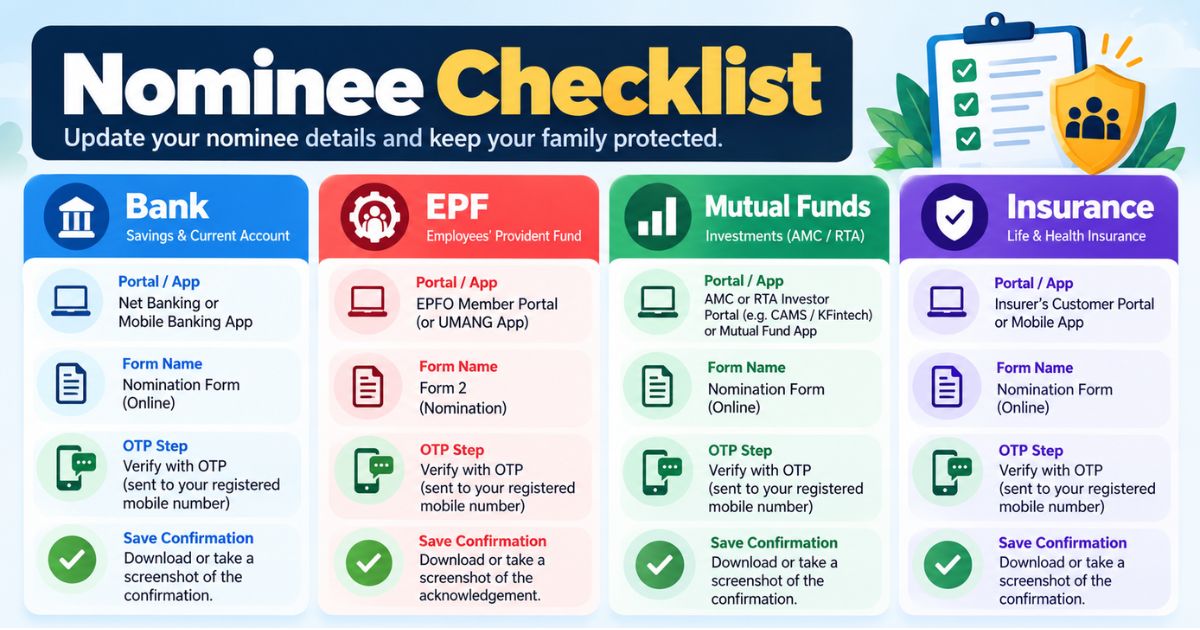
Estate planning documents: wills, trusts, and nominee details for smooth asset transfer
-
Property ownership documents: deeds, registration papers, and property tax records
Keeping these documents safe, updated, and easily accessible isn't just good practice it's a core part of financial planning itself. A secure digital vault for storing and organizing these records means you're never scrambling to find a document when a bank, insurer, or advisor needs it. This is exactly the kind of organized foundation that Nexa Life Vault is built to support, helping you keep every essential financial document in one secure, accessible place as part of your broader financial planning journey.
Financial Planning Checklist
Use this quick checklist to make sure you've covered the essentials:
-
Calculate your current net worth
-
List all income sources and monthly expenses
-
Set an emergency fund covering 3–6 months of expenses
-
Define short-term, medium-term, and long-term goals
-
Review and update insurance coverage (life, health, property)
-
Choose investments aligned with your risk tolerance and timeline
-
Set up automatic transfers for savings and investments
-
Organize and securely store all key financial documents
-
Review your plan at least twice a year
-
Update your plan after major life events
Common Financial Planning Mistakes
Even well-intentioned planners fall into similar traps. Here are the most common ones to avoid:
-
Not having clear goals: vague intentions rarely translate into consistent action
-
Skipping the emergency fund: without one, unexpected expenses force you to break long-term investments or take on debt
-
Ignoring inflation: a plan that doesn't account for rising costs will fall short over time
-
Underinsuring: inadequate health or life insurance can wipe out years of savings in one emergency
-
Not reviewing the plan: a plan created once and never revisited quickly becomes outdated
-
Disorganized documentation: misplaced tax returns, policies, or statements slow down claims, loans, and tax filing
-
Mixing goals and investments: using long-term investments for short-term needs, or vice versa, creates unnecessary risk
Keep Your Financial Documents Organized
A successful financial plan depends on having quick access to important financial records. Documents such as tax returns, investment statements, insurance policies, retirement account details, loan agreements, and property records should be stored in a secure and organized location. A dedicated digital vault can help you manage these records efficiently, reduce the risk of losing critical information, and ensure your family can access essential documents when needed. Learn more about securely organizing your financial records with the Wealth Vault.
Frequently Asked Questions
cmp6hs57y000oc2bxnj5buqzv
Editorial Contributor
Author and technology contributor at NexaLifeVault.
Share this post
Comments (0)
No comments yet. Be the first to comment!