Pet Vaccination Records: How to Store Them Safely
Learn how to store and organize your pet's vaccination records so they're ready for the vet, boarding, grooming, or travel plus what to do if you've lost them.
Vaccination records are the single most requested pet document by vets, groomers, boarding kennels, dog parks, and airlines. Yet they're often the easiest to lose, since they're handed over on a small paper card or a printout that gets buried in a drawer. This guide covers how to store pet vaccination records properly, what to do if you've lost them, and how to keep track of upcoming boosters so nothing lapses unnoticed.
What Should Be Included in a Pet Vaccination Record?
A complete pet vaccination record should show more than just a checkmark next to "vaccinated." It should include enough detail to be usable by any vet, boarding facility, or authority that requests it.
- Vaccine name and type (e.g., rabies, DHPP, FVRCP)
- Date administered
- Expiration or next-due date
- Vet or clinic name and contact information
- Batch or lot number, when provided
- Veterinarian's signature or clinic stamp, for official certificates
Why Proper Storage Matters
A vaccination record isn't useful if it can't be produced when asked for. Boarding kennels typically won't accept a pet without proof, and many won't accept a verbal confirmation from the owner they need to see dates and vaccine types in writing. Some cities require proof of rabies vaccination for pet licensing. Airlines and international borders often require specific timing between vaccination and travel date, which means the actual date on the record matters, not just proof that a vaccine was given at some point.
Beyond convenience, a well-kept record protects your pet's health. Missing a booster date because the paper reminder got lost can leave a pet under-protected, especially for diseases like rabies where timing is strictly regulated.
How to Store Pet Vaccination Records
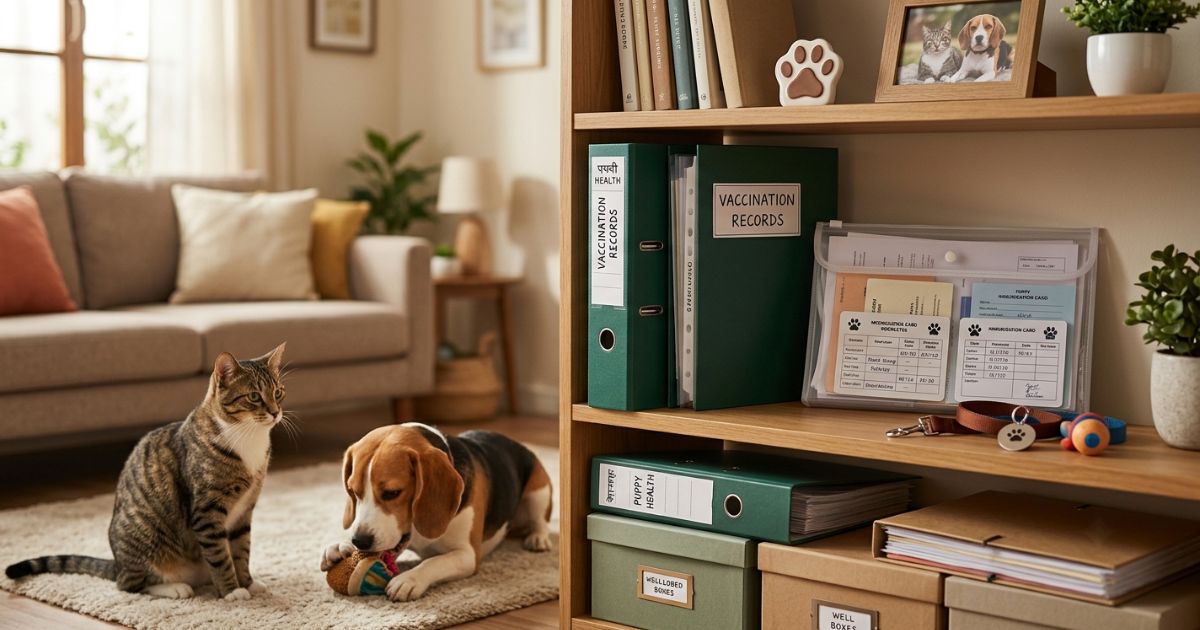
- Get a written copy at every visit. Don't rely on the vet's internal system alone ask for a printed or digital copy each time your pet is vaccinated.
- Digitize immediately. Photograph or scan the paper record the same day, before it has a chance to get lost or damaged.
- Keep records by pet, not by date. If you have multiple pets, group each animal's full vaccination history together rather than mixing all pets into one folder by visit date.
- Track due dates separately from history. Keep a simple list of upcoming boosters so you're not re-reading the entire history just to check what's due next.
- Keep a physical copy accessible for same-day needs, such as a boarding drop-off or vet visit, in addition to the digital backup.
- Update the record the same day as any new vaccination, rather than waiting until it's needed again.
What to Do If You've Lost Your Pet's Vaccination Records
Losing vaccination records is common and usually fixable. Most vet clinics keep their own copies of vaccines they administered, so the first step is contacting every clinic your pet has visited and requesting a copy of their records. If your pet was adopted, the shelter or rescue organization may also have vaccination history on file from before adoption. If a clinic has closed, some vet boards or state veterinary associations may be able to help locate archived records, though this isn't guaranteed. Once you've reconstructed the missing history, digitize and store copies immediately to avoid repeating the search.
Common Mistakes Pet Owners Make
- Keeping only a paper card with no backup, which can be lost, faded, or damaged.
- Not recording the next-due date, leading to missed boosters.
- Assuming the vet clinic will always have records on request, without accounting for clinics closing or switching systems.
- Storing records for multiple pets in one unlabeled pile, making it hard to find the right animal's history quickly.
- Waiting until a boarding or travel deadline to realize records are missing or outdated.
Keeping Vaccination Records Accessible When You Need Them
Vaccination records tend to be needed on short notice a same-day boarding request, a last-minute grooming appointment, or an unplanned vet visit while traveling. A record stored only on paper at home isn't useful if you're not home, and a record buried in old email attachments takes too long to find under time pressure.
This is exactly the kind of document the Nexa Life Vault Pet Vault is built for keeping vaccination history, due dates, and vet contact details organized and accessible from anywhere, so you can produce proof of vaccination whenever it's asked for, without digging through old paperwork. It works alongside the broader pet documents checklist, which covers the rest of your pet's paperwork beyond vaccinations.
A Note on Country-Specific Rules
Vaccination requirements and documentation standards differ by country. In the United States, rabies vaccination requirements are typically set at the state or local level, and timing rules for travel can vary by state and airline. In the United Kingdom, pet vaccination and travel documentation follow the Pet Travel Scheme, with specific requirements around rabies vaccination timing. In India, vaccination requirements can vary by city or municipal authority, particularly for pet licensing. Confirm current requirements with your vet, local authority, or airline before travel, boarding, or licensing deadlines.
Key Takeaways
- A complete vaccination record includes vaccine type, date given, next-due date, and clinic details.
- Digitize vaccination records the same day they're issued to avoid losing them.
- Track upcoming booster due dates separately from historical records.
- If records are lost, contact past vet clinics and shelters first most keep their own copies.
- Keep records organized by pet, not just by date, if you have more than one animal.
- Travel and boarding vaccination requirements vary by country and airline confirm before you need them.
Conclusion
Pet vaccination records are asked for more often than most owners expect, usually with little notice. Start by requesting a written copy at every vet visit, digitizing it immediately, and tracking upcoming due dates separately from history. From there, the Pet Vault can help keep vaccination records and due dates organized in one accessible place, so you're never scrambling to prove your pet is up to date.
Frequently Asked Questions
cmp6hs57y000oc2bxnj5buqzv
Editorial Contributor
Author and technology contributor at NexaLifeVault.
Share this post
Comments (0)
No comments yet. Be the first to comment!