Pet Documents Checklist: What Every Owner Needs
A complete pet documents checklist vaccination records, ownership papers, medical history, and how to keep them organized and accessible when you need them most.
A new vet asks for your dog's vaccination history. A boarding facility won't accept your cat without proof of rabies vaccination. An airline requires a health certificate before a flight. Pet owners often discover how scattered their pet's paperwork is at exactly the wrong moment. This pet documents checklist covers what to keep, how to organize it, and how to make sure it's accessible when a vet, boarding facility, insurer, or airline asks for it.
What Documents Do Pet Owners Need to Keep?
The core documents every pet owner should keep are the ones that prove health status, ownership, and identification. These come up repeatedly at vet visits, boarding stays, travel, and in emergencies.
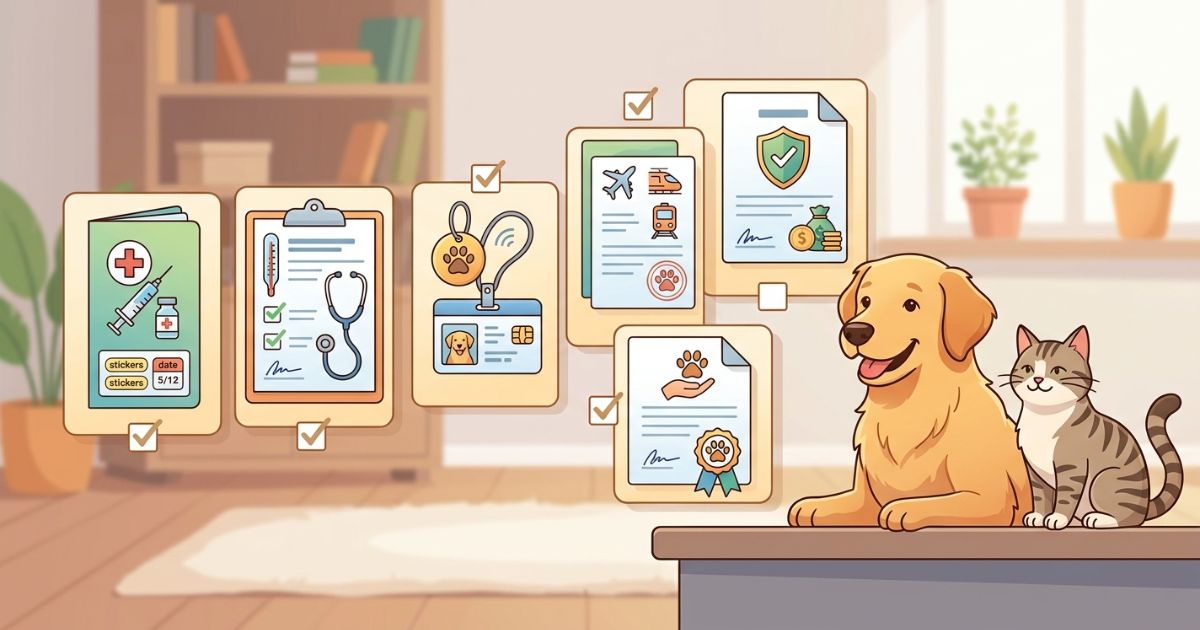
- Vaccination records (rabies, core vaccines, and booster history)
- Microchip registration and ID tag information
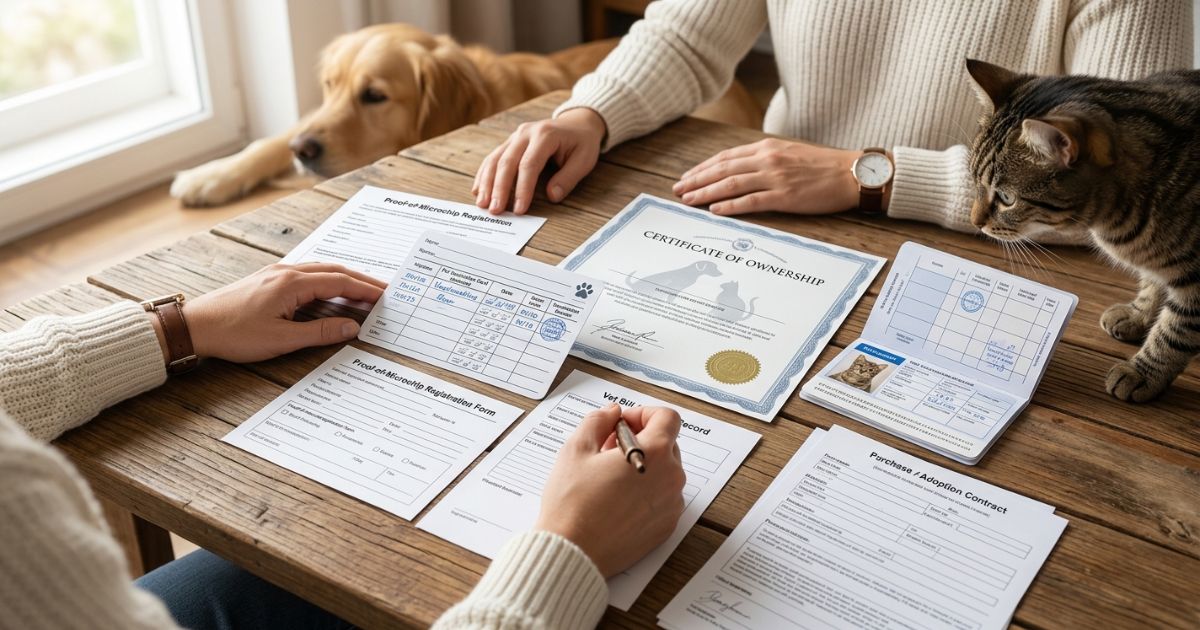
- Adoption papers or proof of purchase
- Veterinary medical history and treatment records
- Pet insurance policy documents
- Spay/neuter certificate, if applicable
- Breed registration papers, for purebred or registered animals
- Health certificates, required for travel or boarding
Why Keeping Pet Documents Organized Matters
Missing pet paperwork causes the same kind of delays that missing human documents do, just in situations pet owners don't always plan for. A boarding kennel that requires proof of vaccination will typically turn away a pet without it, even during a last-minute trip. A new vet without prior medical history may repeat tests unnecessarily or miss a relevant condition. During travel, especially international travel, missing or outdated health certificates can prevent a pet from being allowed on a flight or across a border entirely.
Organized records also matter in less obvious situations: proving ownership if a pet is lost and later found, filing an insurance claim after an unexpected vet bill, or transferring care to a new owner or foster home.
How to Organize Pet Documents Step by Step
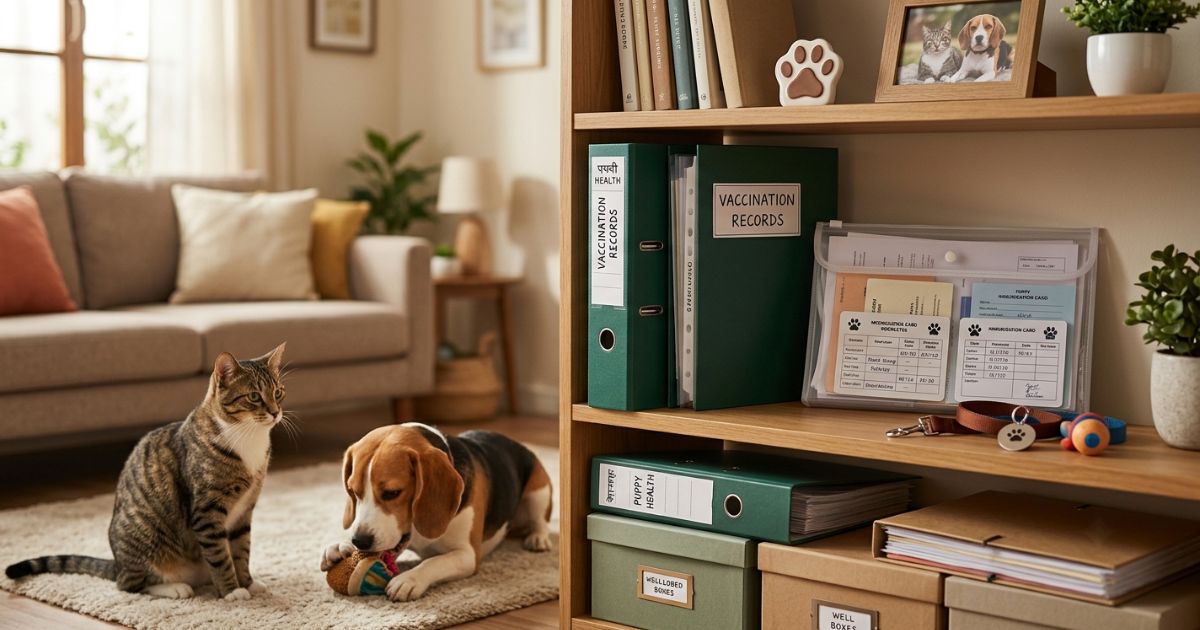
- Start with vaccination records. Request a full written history from your vet, including dates and vaccine types, not just a verbal summary.
- Keep medical history separate from vaccination records. Treatments, diagnoses, allergies, and medications should be grouped on their own, since they're referenced differently than routine vaccination proof.
- Store ownership and identification documents together. Adoption papers, microchip registration, and ID tag details belong in one place, since they're often requested together when proving ownership.
- Digitize everything. Scan or photograph paper records from the vet, shelter, or breeder so you have a backup that isn't dependent on a single physical folder.
- Keep insurance details easily accessible. Policy number, coverage details, and claims contact information should be quick to find during an urgent vet visit.
- Update records after every vet visit. Add new vaccinations, treatments, or diagnoses promptly rather than trying to reconstruct history later.
Documents by Situation
| Situation | Documents Typically Required |
|---|---|
| Boarding or daycare | Vaccination records, sometimes a recent vet exam |
| Air travel | Health certificate, vaccination proof, sometimes microchip confirmation |
| New veterinarian | Full medical history, current medications, allergy information |
| Lost pet recovery | Microchip registration, adoption papers, photos with proof of ownership |
| Pet insurance claim | Policy documents, itemized vet invoices, treatment records |
Common Mistakes Pet Owners Make
- Relying only on the vet's records. Clinics can close, switch systems, or take time to respond to record requests, especially during emergencies.
- No digital backup of vaccination history, making it hard to prove status quickly for boarding or travel.
- Losing microchip registration details after moving or changing contact information, which can prevent a lost pet from being matched back to its owner.
- Not updating records after switching vets, leaving gaps in medical history.
- Keeping adoption or purchase papers in a random drawer instead of with other ownership documents, making them hard to find when proof of ownership is needed.
Keeping Pet Documents Secure and Accessible
Pet documents tend to be needed unexpectedly a same-day boarding request, an emergency vet visit while traveling, or a lost-pet situation where you need to prove ownership quickly. Papers stored in a single physical folder at home aren't much help if you're not home when they're needed.
This is a practical use case for a dedicated system for pet-related paperwork. The Nexa Life Vault Pet Vault is designed to keep vaccination records, medical history, ownership papers, and insurance details organized in one place, so they're accessible from anywhere whether you're at a new vet, a boarding facility, or dealing with a lost pet situation away from home.
If you're also managing related paperwork like travel health certificates for a pet accompanying you on a trip, the travel documents checklist covers what else to prepare before departure.
A Note on Country-Specific Requirements
Pet documentation requirements vary by country, especially for travel and boarding. In the United States, states and airlines may have different requirements for health certificates and rabies vaccination timing. In the United Kingdom, pet travel follows specific rules under the Pet Travel Scheme, including microchipping and vaccination timelines. In India, requirements for pet travel and registration vary by airline and, in some cities, by local municipal regulations. Always confirm current requirements with the relevant airline, vet, or local authority before travel or boarding.
Key Takeaways
- Keep vaccination records, medical history, and ownership documents in separate, clearly labeled categories.
- Request a full written vaccination history from your vet rather than relying on verbal summaries.
- Update records after every vet visit to avoid gaps in medical history.
- Keep microchip registration details current, especially after moving.
- Digital backups make records accessible during travel, boarding, or emergencies away from home.
- Travel and boarding requirements vary by country and airline confirm specifics before you need them.
Conclusion
A pet documents checklist isn't just paperwork it's what lets a vet, boarding facility, or airline trust that your pet is healthy, identified, and accounted for, often on short notice. Start by collecting vaccination and medical records from your vet, gathering ownership papers in one place, and digitizing what's on paper. From there, the Pet Vault can help keep everything organized and accessible, so you're not searching for a vaccination certificate the morning of a boarding drop-off or a flight.
Frequently Asked Questions
cmp6hs57y000oc2bxnj5buqzv
Editorial Contributor
Author and technology contributor at NexaLifeVault.
Share this post
Comments (0)
No comments yet. Be the first to comment!