Home Documents You Should Keep: Essential Records Every Homeowner Needs
Discover the essential home documents you should keep, how to organize them securely, and practical tips for protecting important household records with confidence.
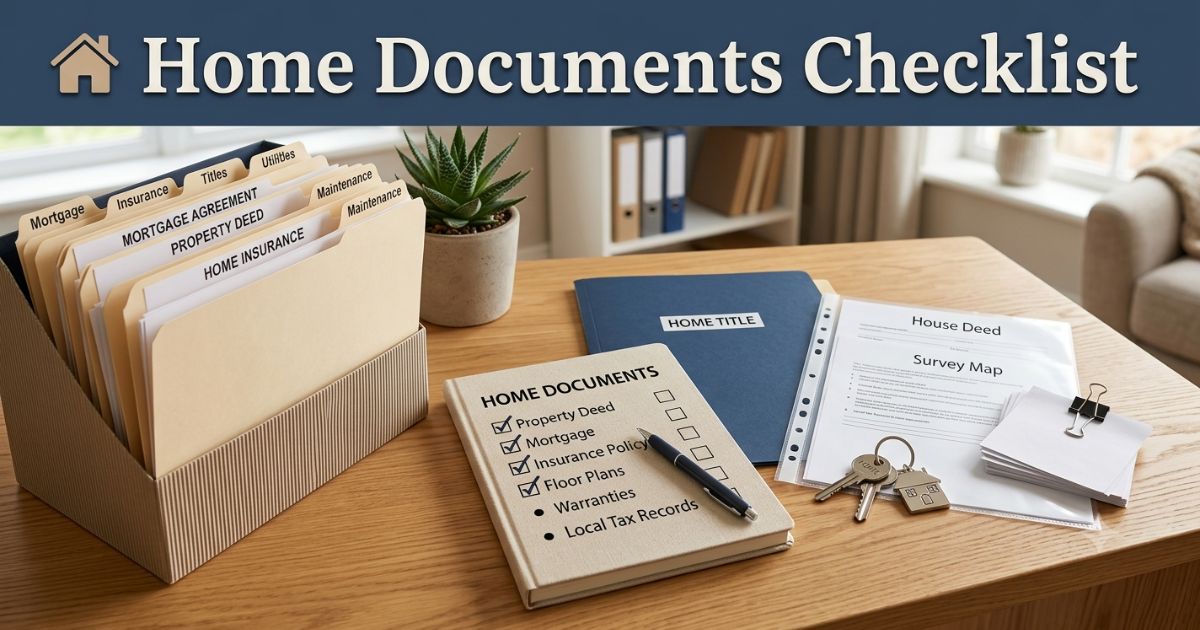
Your home is more than just a place to live it's where many of your most valuable records are kept. From property ownership papers and insurance policies to utility bills and appliance warranties, keeping these documents organized can save time, reduce stress, and help you respond quickly when important situations arise.
Whether you're buying your first home, renting an apartment, or managing a family property, having a clear system for storing household documents makes it easier to locate essential information whenever you need it.
In this guide, you'll learn which home documents you should keep, how long to keep them, and the best ways to organize both physical and digital copies. To explore more practical home organization resources, visit our Home Vault, your central hub for protecting and managing important household records.
Why Organizing Home Documents Is Important
Important household documents are often needed at unexpected times. Whether you're filing an insurance claim, selling your property, applying for a loan, or simply replacing a lost document, having everything organized can make the process much smoother.
Quick Access When You Need It
Searching through drawers or stacks of paperwork wastes valuable time. An organized filing system allows you to find important records within minutes.
Protects Your Legal and Financial Interests
Property deeds, mortgage agreements, insurance policies, and tax records are essential legal documents. Keeping them secure helps protect your ownership rights and financial interests.
Helps During Emergencies
Natural disasters, house fires, or unexpected repairs may require immediate access to important paperwork. Having both physical and digital copies ensures your records remain available even if originals are damaged.
Makes Home Management Easier
Keeping maintenance records, warranty documents, and utility information together helps you manage your home more efficiently and simplifies future repairs or renovations.
Supports Future Planning
Well-organized records make it easier to refinance your home, sell your property, transfer ownership, or provide documentation whenever required.
If you're a homeowner, you'll also benefit from creating a detailed Property Documents Checklist to ensure no essential paperwork is missing.
Essential Home Documents Every Household Should Keep
Every home generates important paperwork over time. Keeping these documents organized helps you manage your property, protect your finances, and quickly access critical information whenever it's needed. While every household is different, the following records should be part of every home document system.
Property Ownership Documents
These documents prove ownership and contain important legal information about your property. They should always be stored in a secure location.
- Property deed or title documents
- Purchase agreement
- Mortgage or home loan paperwork
- Property tax records
- Land survey documents
- Closing documents
Home Insurance Documents
Your insurance records are essential if your home is damaged by fire, theft, flooding, or other unexpected events.
- Home insurance policy
- Policy renewal notices
- Premium payment receipts
- Claim records
- Emergency contact information for your insurer
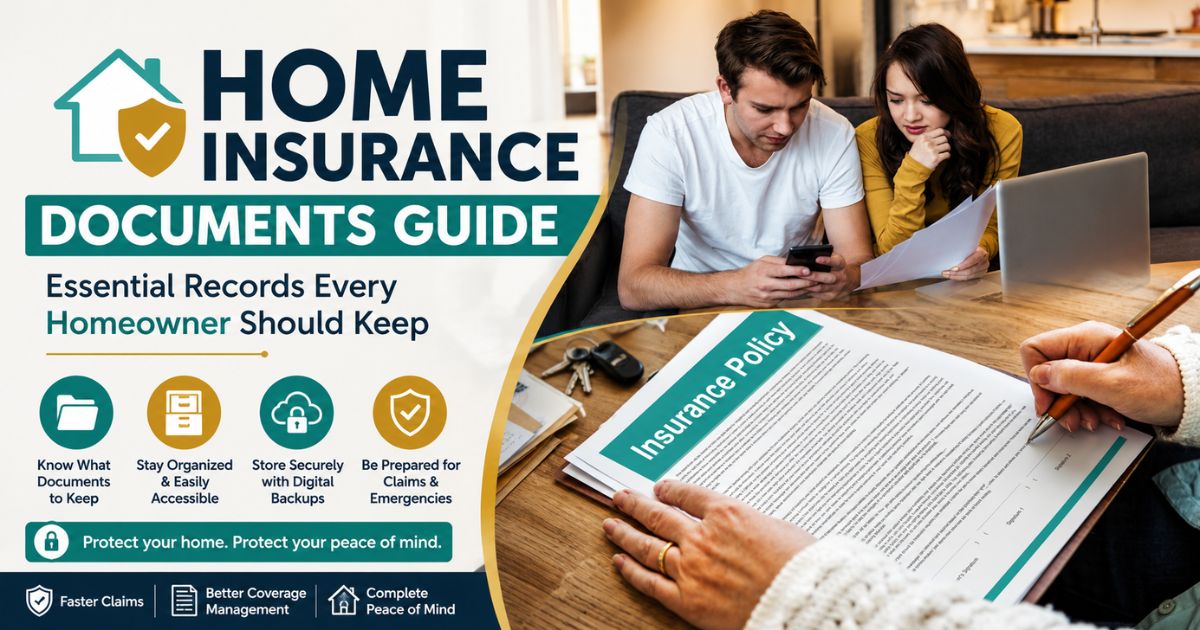
Learn how to organize these records in our Home Insurance Documents Guide.
Utility Bills and Service Records
Keeping utility records can help verify your address, monitor household expenses, and resolve billing disputes.
- Electricity bills
- Water bills
- Gas bills
- Internet and telephone bills
- Waste collection or municipal service records
Home Maintenance and Repair Records
Maintenance records provide a history of repairs and improvements, making future maintenance easier and increasing your property's value.
- HVAC servicing records
- Plumbing repairs
- Electrical work invoices
- Roof repairs
- Painting and renovation records
- Contractor warranties
Appliance Manuals and Warranty Documents
Keeping manuals and warranty information together makes repairs, replacements, and service requests much more convenient.
- Kitchen appliance warranties
- Air conditioner manuals
- Water heater documentation
- Smart home device manuals
- Extended warranty certificates
Financial and Tax Documents
Your home-related financial records help during tax filing, refinancing, property sales, and financial planning.
- Property tax receipts
- Mortgage statements
- Home improvement invoices
- Loan payment records
- Home-related tax documents
Keeping these records organized ensures you can quickly find the information you need while reducing paperwork and avoiding unnecessary stress.
How to Organize and Store Home Documents Securely
Collecting important paperwork is only the first step. To make your records truly useful, they should be organized, protected, and easy to access whenever you need them. A simple document management system can save time, reduce stress, and help you avoid losing valuable information.
Create Separate Categories
Instead of storing every document in a single folder, organize them into clear categories. This makes it much easier to locate specific records during routine home management or unexpected situations.
Consider creating folders for:
- Property ownership documents
- Home insurance records
- Utility bills
- Home maintenance and repairs
- Warranty documents
- Tax and financial records
Use a Secure Physical Storage System
Original documents should always be protected from theft, fire, water damage, and accidental loss.
Good storage options include:
- A fireproof and waterproof document safe
- A locked filing cabinet
- A secure home office drawer
- A safety deposit box for irreplaceable property records
Keep only copies of frequently used documents while storing originals in a secure location whenever possible.
Create Digital Backups
Scanning your important home documents provides an additional layer of protection. Digital copies allow you to access information quickly even if physical records become damaged or unavailable.
Store digital files using:
- Encrypted cloud storage
- Password-protected folders
- External hard drives
- Secure backup services
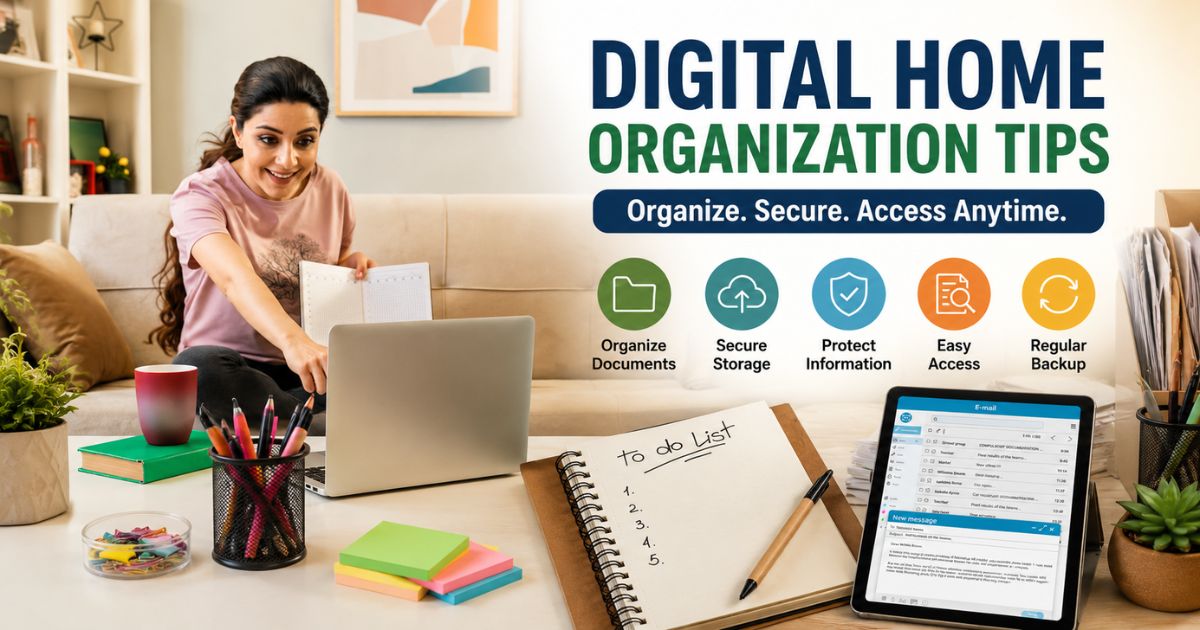
If you're moving toward a paperless system, don't miss our Digital Home Organization Tips guide for practical strategies on managing digital household records.
Use Consistent File Names
Whether your documents are stored physically or digitally, consistent naming makes searching much easier.
For example:
- Home Insurance Policy 2026
- Property Tax Receipt 2026
- Kitchen Renovation Invoice
- Water Bill March 2026
- HVAC Service Record 2026
Clear file names reduce confusion and help family members locate documents quickly.
Review Your Documents Regularly
Your household records should be reviewed at least once a year to remove outdated paperwork and add new documents.
Regularly update:
- Insurance policies
- Warranty information
- Utility account records
- Property tax documents
- Maintenance invoices
- Renovation records
Keeping your files current ensures your home document system remains accurate, organized, and ready whenever important information is needed.
Along with storing personal and legal documents, it's equally important to organize your monthly household paperwork. Our Utility Bills & Home Records Management guide explains practical ways to keep bills, service records, and payment documents organized for easy access whenever you need them.
Best Practices for Managing Home Documents
A well-organized home document system isn't something you set up once and forget. Regular maintenance helps keep your records accurate, secure, and easy to access whenever they're needed.
Keep Both Physical and Digital Copies
Original documents remain important for legal and financial purposes, while digital copies provide quick access and an extra layer of protection. Maintaining both formats helps reduce the risk of losing valuable information.
Label Folders Clearly
Use simple, descriptive folder names so anyone in your household can quickly locate the right document. Whether you're organizing paper files or digital folders, consistency makes a big difference.
Protect Sensitive Information
Home documents often contain personal details, financial information, and property records. Store physical files in secure locations and protect digital copies with strong passwords, encryption, and multi-factor authentication whenever possible.
Know How Long to Keep Documents
Not every document needs to be stored forever. Some records, such as property deeds and ownership papers, should be kept permanently, while utility bills, maintenance invoices, and tax-related paperwork can usually follow your local legal or financial record-keeping recommendations.
Inform Trusted Family Members
Your document system is only helpful if someone can access it during an emergency. Let a trusted family member know where important records are stored and how they can retrieve them if necessary.
Common Mistakes to Avoid
- Keeping all important documents in one unsecured location.
- Throwing away original property or legal documents.
- Never creating digital backups.
- Using unclear folder names that make documents difficult to find.
- Ignoring warranty papers and maintenance records.
- Forgetting to review and update documents after buying, selling, or renovating a home.
Conclusion
Knowing which home documents you should keep is the foundation of an organized and well-managed household. By storing property records, insurance documents, utility bills, warranties, and maintenance records in a secure system, you'll be better prepared for everyday responsibilities as well as unexpected situations.
Combining secure physical storage with digital backups makes your records easier to manage while reducing the risk of loss or damage. A little organization today can save significant time and stress in the future.
For more practical home organization guides, visit our Home Vault.
Frequently Asked Questions
cmp6hs57y000oc2bxnj5buqzv
Editorial Contributor
Author and technology contributor at NexaLifeVault.
Share this post
Comments (0)
No comments yet. Be the first to comment!