Home Insurance Documents Guide: Organize Your Insurance Records
Discover the essential home insurance documents every homeowner should keep. Learn how to organize policy records, claim paperwork, and digital backups for better protection.
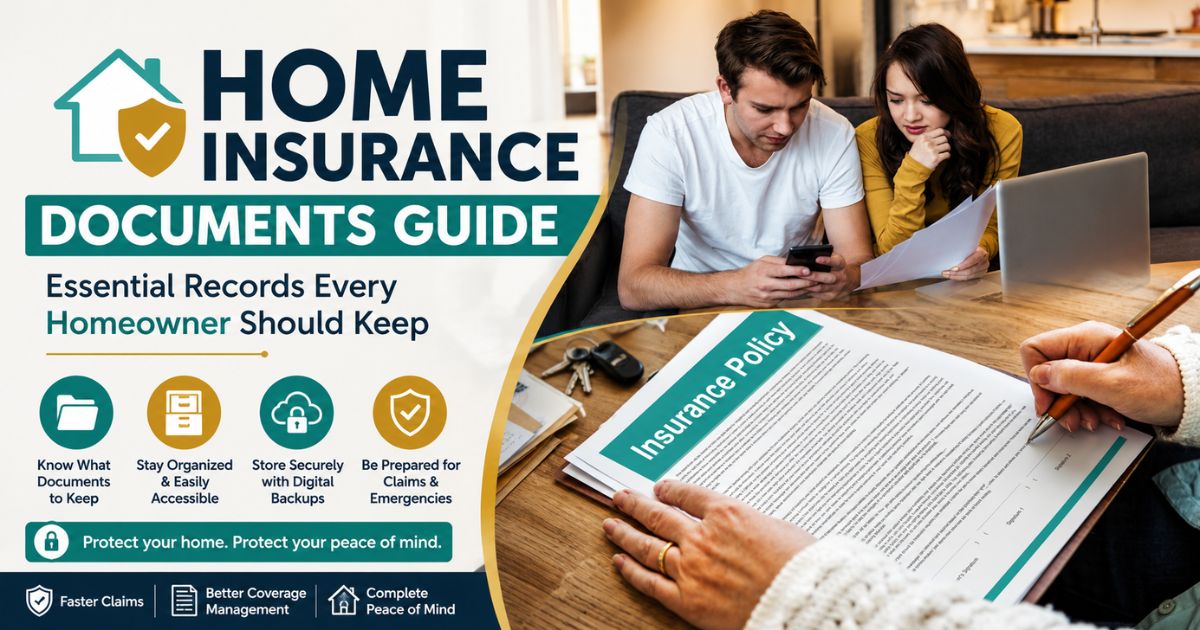
Home insurance helps protect one of your most valuable assets, but having a policy isn't enough. To file claims quickly, renew coverage without delays, or prove your insurance protection, you also need to keep your insurance documents organized and easy to access.
Whether you're dealing with storm damage, theft, fire, or routine policy updates, having the right paperwork readily available can save valuable time and reduce unnecessary stress. Missing or incomplete records may delay claim processing or make it more difficult to verify your coverage.
In this guide, you'll learn which home insurance documents you should keep, how long to retain them, and the best ways to organize both physical and digital copies. For more practical resources on managing household paperwork, visit our Home Vault, your complete guide to protecting important home records.
Why Home Insurance Documents Are Important
Your home insurance policy is more than just a contract—it provides financial protection when unexpected events affect your property. Keeping your insurance documents organized ensures you can quickly access important information whenever you need to file a claim, renew your policy, or verify your coverage.
Speeds Up Insurance Claims
When your home is damaged by fire, storms, theft, or other covered events, insurance companies often require policy documents, claim records, and supporting paperwork before processing your claim.
Having these documents organized helps avoid unnecessary delays during an already stressful situation.
Provides Proof of Coverage
Your insurance policy serves as official proof of coverage and outlines what is and isn't protected. Keeping the latest version readily available makes it easier to confirm coverage limits, deductibles, and policy terms.
Helps Track Policy Renewals
Insurance policies should be reviewed regularly. Keeping renewal notices, premium receipts, and updated policy documents together helps prevent lapses in coverage.
Supports Home Repairs
After a covered incident, repair estimates, contractor invoices, and claim documents become important records. Keeping them with your insurance paperwork makes future reference much easier.
Improves Financial Organization
Insurance records are part of your overall home document system. Organizing them alongside property ownership documents, tax records, and maintenance files helps you manage your household more efficiently.
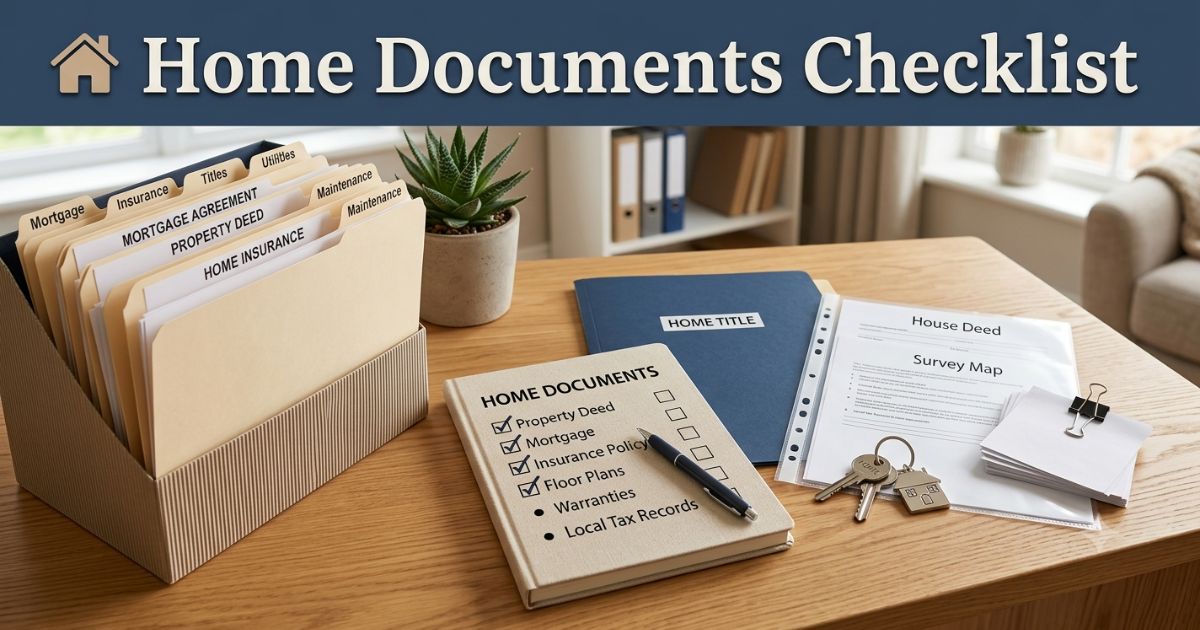
Before organizing your insurance paperwork, make sure your household records are already in order by following our Home Documents You Should Keep guide.
Essential Home Insurance Documents Checklist
Keeping your home insurance paperwork organized makes it easier to file claims, renew your policy, and verify your coverage whenever needed. A complete insurance file should include every document related to your policy, payments, and past claims.
Home Insurance Policy
Your insurance policy is the most important document in your insurance file. It explains your coverage, policy limits, exclusions, deductibles, and the responsibilities of both you and your insurance provider.
Always keep the latest version of your policy along with any updates or endorsements.
Insurance Declaration Page
The declaration page provides a quick summary of your insurance policy. It typically includes:
- Policy number
- Policyholder details
- Property address
- Coverage limits
- Deductible amount
- Policy effective and expiration dates
This document is often the first thing you'll need when contacting your insurance company.
Premium Payment Records
Keep receipts and payment confirmations for all insurance premiums. These records help verify your payment history and can be useful if billing questions arise.
Maintain copies of:
- Payment receipts
- Bank confirmations
- Auto-payment records
- Annual billing statements
Policy Renewal Documents
Each time your insurance policy is renewed, save the updated documents and review any changes to your coverage, premiums, or deductible.
Keeping renewal notices together makes it easier to compare policies over time.
Insurance Claim Records
If you've filed a claim, keep every document related to the process for future reference.
This may include:
- Claim forms
- Claim reference numbers
- Insurance company correspondence
- Settlement letters
- Payment confirmations
Maintaining complete claim records can be helpful if questions arise later.
Home Inventory List
A detailed home inventory helps prove ownership of personal belongings when filing an insurance claim.
Your inventory should include:
- Furniture
- Electronics
- Appliances
- Jewelry
- Valuable collections
- Major household items
Whenever possible, include purchase dates, estimated values, and receipts.
Photos and Videos of Your Home
Recent photos and videos can provide valuable evidence of your property's condition before damage occurs.
Consider documenting:
- Each room
- Expensive belongings
- Exterior areas
- Garage and storage spaces
- Recent renovations or upgrades
Update these images after major purchases or home improvements.
Repair Estimates and Contractor Invoices
If your home has been repaired after an insured event, keep all related documentation.
- Repair estimates
- Contractor quotations
- Invoices
- Proof of completed work
- Warranty documents
These records may be required for future claims or policy reviews.
Insurance Company Contact Information
Store your insurer's contact details in both physical and digital formats so they're easy to access during an emergency.
Include:
- Customer service number
- Emergency claims hotline
- Agent or broker contact details
- Policy number
- Online account information
Keeping these essential documents together ensures you'll be prepared to respond quickly if your home is damaged or you need to contact your insurance provider.
It's also a good idea to keep these records alongside your Property Documents Checklist, so all important homeownership paperwork is organized in one secure location.
How to Organize and Store Home Insurance Documents Securely
Keeping your home insurance documents organized is just as important as having the right insurance coverage. A well-structured filing system helps you quickly locate important paperwork when filing claims, renewing your policy, or dealing with unexpected emergencies.
Create a Dedicated Insurance Folder
Store all home insurance documents in one dedicated folder instead of keeping them with unrelated household paperwork. This makes it easier to access everything you need in one place.
Your insurance folder should include:
- Insurance policy documents
- Declaration page
- Premium payment receipts
- Policy renewal notices
- Claim records
- Home inventory
- Repair estimates and invoices
- Insurance company contact details
Protect Original Documents
Original insurance paperwork should be stored in a secure location where it's protected from fire, water damage, theft, and accidental loss.
Recommended storage options include:
- A fireproof and waterproof document safe
- A locked filing cabinet
- A secure home office drawer
- A safety deposit box for highly valuable records
Keep frequently used copies separate from the originals to reduce unnecessary handling.
Create Secure Digital Copies
Scanning your insurance documents provides an additional backup and allows you to access important information even if physical records become unavailable.
When creating digital copies:
- Scan documents in high quality
- Save files as searchable PDFs
- Use consistent file names
- Store backups in multiple secure locations
Digital copies can be especially useful when you need immediate access while traveling or during emergencies.
Use Secure Cloud Storage
Cloud storage provides convenient access to your insurance documents from any device while protecting them against hardware failure or physical damage.
For better security:
- Enable multi-factor authentication
- Create strong, unique passwords
- Limit access to trusted family members
- Review sharing permissions regularly
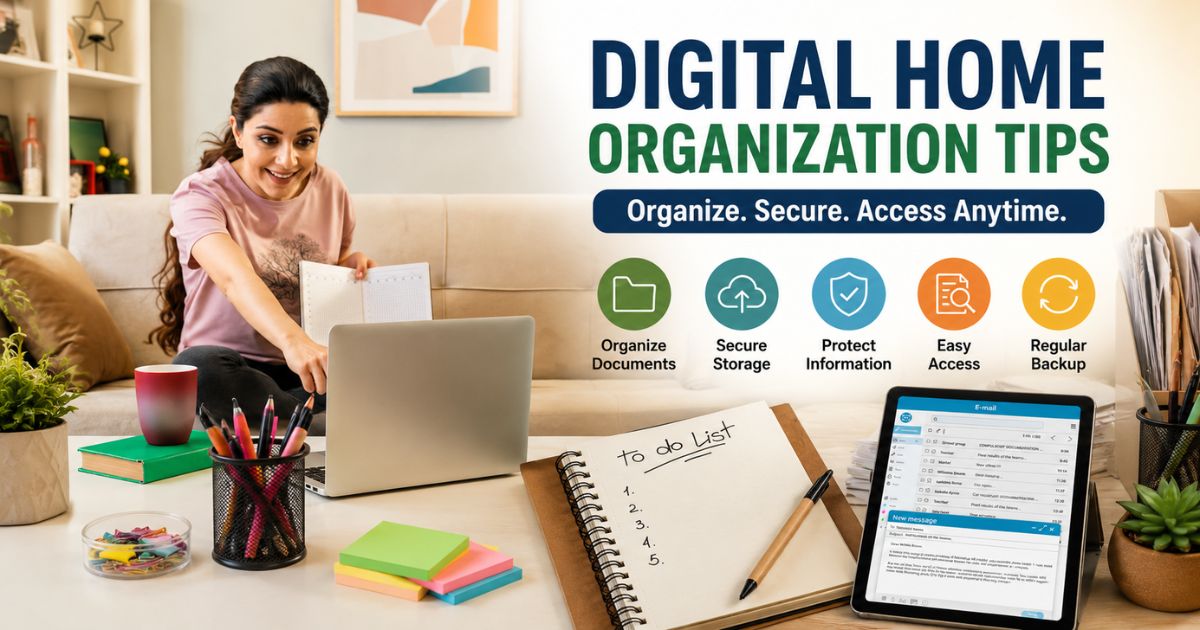
Our Digital Home Organization Tips guide explains how to securely organize important household documents online.
Review Your Insurance Documents Every Year
Insurance coverage should be reviewed annually to ensure it still reflects your home's value and your current needs.
Update your records whenever you:
- Renew your insurance policy
- Complete major home improvements
- Purchase expensive household items
- File an insurance claim
- Change insurance providers
Keeping your documents current helps avoid confusion and ensures your records accurately reflect your coverage.
Keep Emergency Access Information Ready
During an emergency, you may need to contact your insurance provider immediately. Store important contact information in both printed and digital formats.
Your emergency information should include:
- Insurance company contact number
- Claims hotline
- Policy number
- Agent or broker contact details
- Online account login information stored securely
Having this information readily available can help speed up the claims process when every minute matters.
A secure filing system, regular updates, and reliable digital backups ensure your home insurance documents remain protected and easily accessible whenever you need them.
Best Practices for Managing Home Insurance Documents
Organizing your home insurance documents is not a one-time task. Regularly reviewing and updating your records helps ensure you're always prepared to file a claim, renew your policy, or verify your coverage when unexpected situations arise.
Keep Both Physical and Digital Copies
Original insurance documents are important for legal and financial purposes, while digital copies provide quick access whenever you're away from home or need immediate information.
Maintaining both versions helps reduce the risk of losing critical records due to theft, fire, water damage, or hardware failure.
Organize Documents by Category
A structured filing system makes it easier to locate specific documents without searching through stacks of paperwork.
Consider creating separate folders for:
- Current insurance policies
- Premium payment records
- Claim documents
- Home inventory
- Repair invoices
- Policy renewal notices
Update Your Home Inventory Regularly
Your insurance coverage should reflect the current contents of your home. Whenever you purchase valuable furniture, electronics, appliances, or complete major renovations, update your home inventory.
Don't forget to add:
- Purchase receipts
- Photos and videos
- Warranty information
- Estimated replacement values
Keeping your inventory current makes future insurance claims much easier.
Review Your Policy Every Year
Insurance needs can change over time. Review your policy annually to ensure your coverage still matches your home's value and any recent improvements you've made.
You should also compare:
- Coverage limits
- Deductibles
- Optional coverage
- Policy exclusions
- Premium costs
A yearly review helps you avoid being underinsured or paying for coverage you no longer need.
Store Emergency Contact Information
Keep your insurance company's contact details in both printed and digital formats so you can quickly report damage or begin a claim.
Your emergency information should include:
- Claims hotline
- Customer support number
- Policy number
- Agent or broker contact details
- Emergency assistance numbers
Common Mistakes to Avoid
- Keeping insurance documents in multiple unorganized locations.
- Failing to update your home inventory after major purchases.
- Discarding old claim records too soon.
- Not reviewing your policy before renewal.
- Storing only paper copies without digital backups.
- Sharing policy documents through unsecured communication channels.
Insurance documents are easier to manage when they're organized alongside your other household records. Our Utility Bills & Home Records Management guide shows you how to organize bills, payment records, and service documents as part of a complete home document system.
Conclusion
A well-organized home insurance documents guide helps you stay prepared for unexpected events while protecting one of your most valuable investments. By keeping policy documents, payment records, claim history, home inventories, and supporting paperwork together, you'll be able to respond more quickly when filing claims or updating your coverage.
Combining secure physical storage with encrypted digital backups gives you peace of mind and ensures your insurance records remain safe, organized, and easy to access whenever they're needed.
cmp6hs57y000oc2bxnj5buqzv
Editorial Contributor
Author and technology contributor at NexaLifeVault.
Share this post
Comments (0)
No comments yet. Be the first to comment!