Utility Bills & Home Records Management: A Complete Organization Guide
Learn how to organize utility bills and home records with practical tips for filing, digital storage, document retention, and efficient household record management.
Utility bills and household records may seem like everyday paperwork, but they play an important role in managing your home. Whether you need proof of residence, want to monitor your monthly expenses, resolve a billing issue, or prepare documents for financial and legal purposes, keeping these records organized can save both time and stress.
Many homeowners keep stacks of electricity, water, gas, internet, and maintenance bills without any clear system. Over time, this clutter makes it difficult to locate important documents when they are needed most.
This guide explains which utility bills and home records you should keep, how long to retain them, and the best ways to organize both paper and digital copies. If you're building a complete household document system, visit our Home Vault for more practical guides on protecting and managing important home records.
Why Utility Bills and Home Records Matter
Utility bills do more than confirm that you've paid for electricity or water. They serve as valuable records that can help verify your address, support financial planning, resolve billing disputes, and provide documentation for various legal or administrative processes.
Proof of Residence
Many organisations accept utility bills as proof of address when opening bank accounts, applying for government services, updating identification documents, or completing property-related paperwork.
Track Household Expenses
Keeping monthly utility bills allows you to monitor your household spending over time. Comparing previous bills can help identify seasonal changes, unusually high usage, or opportunities to reduce energy and water consumption.
Resolve Billing Disputes
If you ever question a charge from a utility provider, having copies of previous bills and payment records makes it much easier to verify your account history and resolve the issue.
Support Tax or Financial Records
In some situations, utility bills may be required as supporting documents for tax purposes, rental agreements, business use of a home office, or other financial records.
Maintain Home Service History
Beyond monthly bills, records related to internet installation, maintenance contracts, appliance servicing, and home improvement work provide a useful history of your property. Keeping these documents together helps when scheduling repairs, making warranty claims, or selling your home.
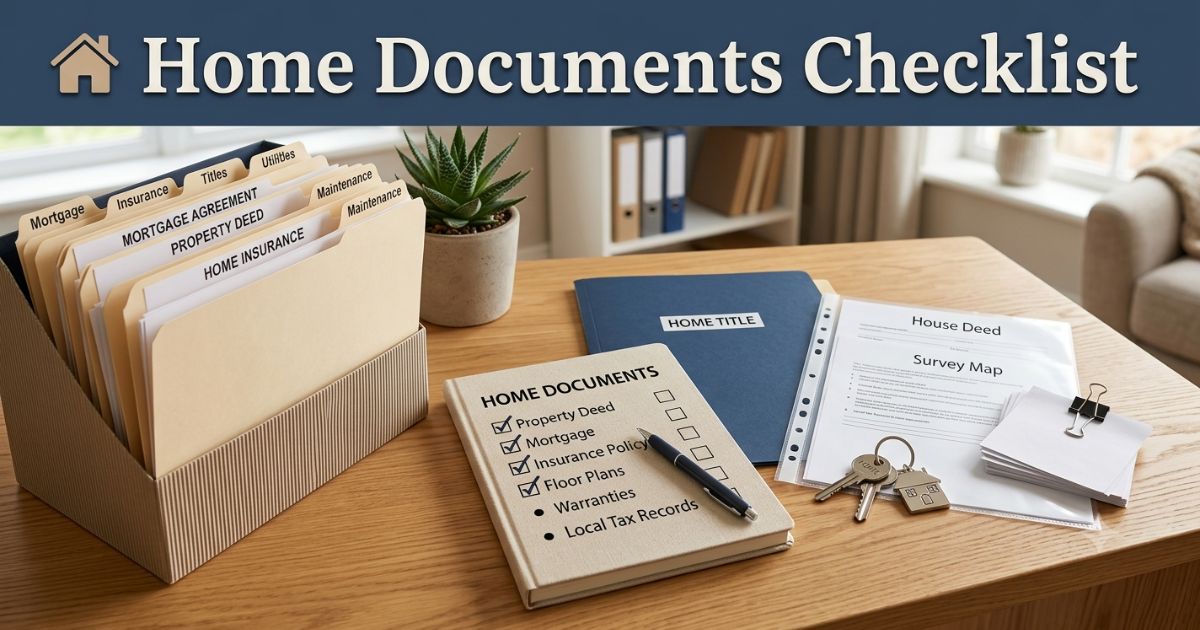
Before organising your utility records, make sure your essential household paperwork is already in place by reading our Home Documents You Should Keep guide.
Essential Utility Bills and Home Records Checklist
Keeping your utility bills and household records in one organized location makes it easier to manage your finances, verify your address, track expenses, and resolve service-related issues. While not every document needs to be kept forever, some records should be retained for future reference.
Electricity Bills
Electricity bills help you monitor energy usage, compare monthly costs, and provide proof of residence when required.
Keep records of:
- Monthly electricity bills
- Payment confirmations
- Outstanding balance statements
- Meter reading records, if available
Water and Sewer Bills
Water bills provide a history of household water usage and can help identify unusual increases that may indicate leaks or other issues.
Save:
- Water bills
- Sewer service bills
- Payment receipts
- Account statements
Gas Bills
Gas bills are useful for tracking heating costs and maintaining a complete record of your household utility expenses.
Retain:
- Monthly gas bills
- Payment confirmations
- Annual account summaries
Internet, Phone, and Television Bills
Communication service bills may be needed to verify your address, review service agreements, or resolve billing disputes.
- Internet bills
- Landline or mobile bills
- Television service bills
- Subscription invoices
Property Tax Records
Property tax documents should be kept separately from monthly utility bills but stored within your overall home records system.
These records may be needed when selling your home, refinancing, or preparing financial documents.
Home Maintenance and Repair Records
Documents related to home maintenance help track repairs, servicing, and improvements made over the years.
Examples include:
- HVAC servicing records
- Roof repairs
- Plumbing work
- Electrical repairs
- Pest control services
- Cleaning services
Appliance Warranty Documents
Keep warranty certificates, purchase receipts, and user manuals for major household appliances such as refrigerators, washing machines, air conditioners, and ovens.
These documents simplify warranty claims and future servicing.
Home Improvement Records
If you've completed renovations or upgrades, keep all related paperwork together.
- Contractor agreements
- Invoices
- Material receipts
- Permits (where applicable)
- Completion certificates
These records can be valuable when calculating property value or selling your home.
Utility Payment Receipts
Whether you pay online or in person, save proof of payment for your utility services.
Useful records include:
- Bank transaction confirmations
- Email payment receipts
- Direct debit confirmations
- Online payment history
Service Agreements and Contracts
Keep copies of ongoing service agreements for household utilities and maintenance providers.
- Internet contracts
- Security system agreements
- Home warranty plans
- Maintenance contracts
- Utility service agreements
Organizing these documents alongside your Property Documents Checklist and Home Insurance Documents Guide helps create a complete home record system that's easy to maintain and access whenever needed.
How to Organize Utility Bills and Home Records
A well-organized filing system makes managing utility bills and household records much easier. Instead of searching through piles of paperwork or multiple digital folders, you can quickly locate the information you need for payments, warranty claims, financial planning, or proof of residence.
Create Separate Categories
Organize your documents into clearly labeled categories instead of storing everything in one folder.
Consider creating folders for:
- Electricity bills
- Water and sewer bills
- Gas bills
- Internet and communication services
- Property tax records
- Home maintenance records
- Warranty documents
- Service contracts
This structure helps you find documents quickly and keeps related paperwork together.
Store Important Paper Documents Securely
Although many bills are now available online, some original documents should still be stored safely.
Use secure storage options such as:
- A labeled filing cabinet
- A document organizer
- A locked drawer
- A fireproof and waterproof document safe for important records
Keep frequently accessed bills separate from long-term records to make daily management easier.
Create Digital Copies
Scanning utility bills and home records helps reduce paper clutter while providing an additional backup if physical documents are lost or damaged.
When creating digital copies:
- Scan documents in high resolution.
- Save files as searchable PDF documents.
- Use clear and consistent file names.
- Back up files regularly.
If you're planning to move toward a paperless home office, our Digital Home Organization Tips guide explains how to securely organize household records.
Use a Consistent File Naming System
A simple naming convention makes digital documents much easier to search and sort.
For example:
- Electricity Bill - January 2026
- Water Bill - February 2026
- Internet Invoice - March 2026
- HVAC Service Report - 2026
- Property Tax Receipt - 2026
Using the same format across all files creates a cleaner and more organized document system.
Know How Long to Keep Records
Not every utility bill needs to be stored permanently. Review your records regularly and keep documents only for as long as they remain useful or are required for legal, financial, or tax purposes.
Documents that may deserve longer retention include:
- Property tax records
- Major renovation invoices
- Warranty certificates
- Long-term service agreements
Review Your Records Every Year
Schedule an annual review of your household documents to remove outdated bills, update service contracts, and add new maintenance records.
This annual review helps prevent unnecessary paperwork while ensuring important records remain complete and easy to access.
By combining organized paper files with secure digital backups, you'll create a reliable home record management system that saves time, reduces clutter, and keeps important information readily available whenever it's needed.
Best Practices for Managing Utility Bills and Home Records
Creating an organized filing system is only the beginning. Regularly maintaining your utility bills and home records ensures important information remains accurate, easy to access, and protected from loss or damage. Following a few simple habits can save time and prevent unnecessary stress in the future.
Keep Both Paper and Digital Copies
Although many service providers now offer paperless billing, it's still a good idea to keep digital copies of important bills and selected paper records for essential household documents. Having both formats provides additional protection if one copy becomes unavailable.
Organize Records by Year
Separate utility bills and home records by year and category to make searching much easier.
For example:
- Electricity Bills – 2026
- Water Bills – 2026
- Gas Bills – 2026
- Internet Bills – 2026
- Home Maintenance – 2026
- Property Tax Records – 2026
This simple structure keeps your filing system clean and prevents documents from becoming mixed together.
Review Monthly Statements
Don't file bills without reviewing them first. Check each statement for unusual charges, incorrect meter readings, unexpected service fees, or billing errors before making payment.
Early review allows you to resolve problems quickly and avoid larger issues later.
Protect Sensitive Information
Utility bills often contain personal information such as your address, account numbers, and payment details.
To protect your privacy:
- Store paper records in a secure location.
- Protect digital files with strong passwords.
- Enable multi-factor authentication for cloud storage.
- Safely shred documents before disposal if they contain sensitive information.
Keep Service Contracts Together
Whenever you sign a new agreement with a utility provider or maintenance company, store the contract with the related bills and payment records.
This makes it easier to review service terms, renewal dates, warranty coverage, and cancellation policies.
Common Mistakes to Avoid
- Keeping every bill forever without removing outdated records.
- Throwing away important tax or property-related documents too early.
- Storing bills in multiple unorganized locations.
- Ignoring digital backups.
- Using inconsistent file names that make records difficult to find.
- Not reviewing bills for billing errors before filing them.
Conclusion
Effective utility bills home records management helps keep your household organized while making important documents easy to locate whenever they're needed. From monthly utility bills and maintenance records to warranty documents and service contracts, a structured filing system saves time and supports better financial and home management.
Combining organized paper files with secure digital backups gives you greater peace of mind and reduces the risk of losing valuable household records. A few minutes spent organizing your documents today can make future repairs, financial planning, and property management much simpler.
Frequently Asked Questions
cmp6hs57y000oc2bxnj5buqzv
Editorial Contributor
Author and technology contributor at NexaLifeVault.
Share this post
Comments (0)
No comments yet. Be the first to comment!